
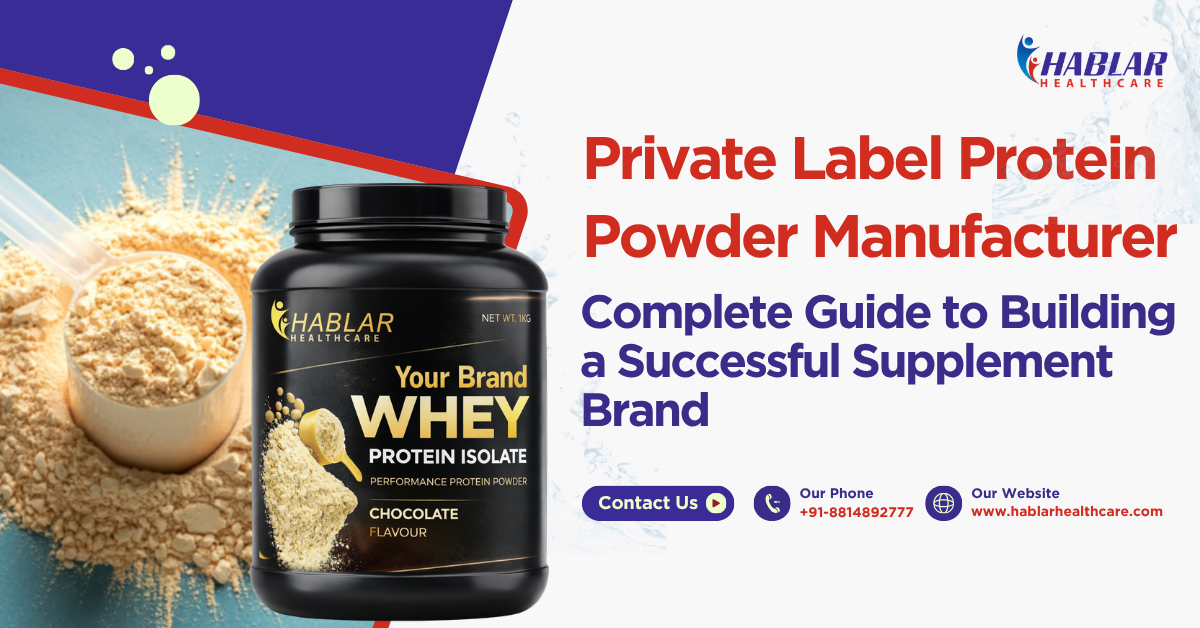
The health and fitness industry is growing at an unprecedented pace, and protein supplements have become one of the most demanded products in the nutraceutical market. One of the smartest and most cost-effective ways to launch a supplement business is by partnering with a private label protein powder manufacturer.
From athletes and gym enthusiasts to busy professionals and health-conscious individuals, consumers are increasingly turning toward protein powders to support their fitness and wellness goals. This rising demand has created a massive business opportunity for entrepreneurs and brands looking to enter the supplement industry.
Private labeling allows companies to sell premium-quality protein supplements under their own brand name without investing in manufacturing infrastructure. This business model enables startups and established businesses alike to launch products quickly, reduce operational costs, and focus on branding and marketing.
In this detailed guide, we will explore everything you need to know about private label protein powder manufacturing, including its benefits, manufacturing process, product types, challenges, and how to choose the right manufacturing partner.
What is a Private Label Protein Powder Manufacturer?
A private label protein powder manufacturer is a company that produces protein supplements and allows businesses to market and sell those products under their own brand name. The manufacturer handles formulation, production, quality testing, packaging, and labeling, while the brand owner focuses on sales, marketing, and customer acquisition.
This manufacturing model eliminates the need to establish your own factory, purchase expensive machinery, or manage complex regulatory approvals. Instead, you can leverage the expertise and infrastructure of an experienced manufacturer to build your own supplement brand efficiently.
Private labeling has become extremely popular in the fitness and wellness industry because it allows businesses to enter the market faster while minimizing financial risks.
Why the Demand for Private Label Protein Powder is Growing
The global protein supplement market has expanded significantly due to increasing awareness about fitness, preventive healthcare, and sports nutrition. In India especially, the demand for protein powder is rapidly increasing among young consumers, athletes, bodybuilders, and even working professionals.
Several factors are driving this growth:
- Increasing gym memberships and fitness awareness
- Rising popularity of sports nutrition
- Growing trend of preventive healthcare
- Higher demand for vegan and plant-based proteins
- Expansion of e-commerce and D2C supplement brands
As consumer demand continues to rise, businesses are increasingly choosing private label manufacturing to capitalize on market opportunities without large-scale investments.
Benefits of Choosing a Private Label Protein Powder Manufacturer
Low Investment Requirement
One of the biggest advantages of private labeling is that it significantly reduces startup costs. Setting up a protein manufacturing facility requires huge investments in machinery, licenses, labor, and quality control systems. Private label manufacturing eliminates these expenses and allows brands to enter the market with comparatively low capital.
Faster Product Launch
Private label manufacturers already have established manufacturing systems, raw material sourcing, and packaging solutions. This enables businesses to launch products much faster than setting up an in-house manufacturing operation.
For startups and emerging brands, speed-to-market can be a major competitive advantage.
Access to Expert Formulations
Experienced manufacturers have strong R&D teams that understand ingredient combinations, nutritional profiles, and market trends. This helps brands create effective and competitive protein formulations tailored to consumer demands.
Whether you want whey protein, plant-based protein, mass gainers, or meal replacement formulas, manufacturers can provide ready-to-market solutions.
High-Quality Production Standards
Reputable private label manufacturers follow strict quality standards and regulatory guidelines. Most leading manufacturers operate GMP-certified and FSSAI-approved facilities, ensuring product safety, consistency, and compliance.
This enhances brand credibility and customer trust.
Flexible Product Customization
Private label manufacturing offers flexibility in:
- Protein types
- Flavors
- Packaging styles
- Nutritional profiles
- Serving sizes
- Branding and labeling
This customization allows businesses to create unique products that stand out in a competitive market.
Types of Protein Powders Offered by Private Label Manufacturers
Whey Protein
Whey protein is one of the most popular protein supplements globally due to its high amino acid content and fast absorption rate. It is commonly used for muscle recovery and performance enhancement.
The demand for vegan and dairy-free supplements has increased dramatically. Plant-based proteins are ideal for vegan consumers and individuals with lactose intolerance.
Common plant protein sources include:
- Pea protein
- Soy protein
- Brown rice protein
- Pumpkin seed protein
- Mass Gainers
Mass gainers are calorie-dense supplements designed for individuals looking to gain weight and muscle mass. These products usually combine protein with carbohydrates and healthy fats.
Meal Replacement Protein
Meal replacement proteins contain balanced nutrition including protein, vitamins, minerals, and fiber. These products are popular among busy professionals and individuals following weight management programs.
Specialized Protein Formulations
Many manufacturers also provide customized formulations targeting:
- Women’s nutrition
- Senior health
- Sports performance
- Kids nutrition
- Keto-friendly diets
How the Private Label Manufacturing Process Works
Step 1: Product Consultation
The process begins with understanding your business goals, target audience, and product requirements. You discuss formulation preferences, flavors, packaging, and branding with the manufacturer.
Step 2: Formula Selection or Customization
You can either select from existing formulations or develop a custom protein blend according to your market strategy.
Custom formulations allow brands to create differentiated products with unique selling points.
Step 3: Sampling and Approval
Manufacturers provide product samples for taste, texture, and quality evaluation. Once approved, the final formulation is locked for production.
Step 4: Packaging and Label Design
Packaging plays a critical role in attracting customers. Manufacturers often offer:
- Jars
- Pouches
- Sachets
- Stick packs
Professional label design and branding enhance shelf appeal and customer perception.
Step 5: Manufacturing and Quality Testing
The manufacturer produces the product in GMP-certified facilities while conducting quality checks at multiple stages.
Testing generally includes:
- Nutritional verification
- Microbial testing
- Heavy metal testing
- Stability testing
Step 6: Delivery and Distribution
Once production is complete, products are delivered to your warehouse, distributors, or fulfillment centers for market launch.
How to Choose the Best Private Label Protein Powder Manufacturer
Selecting the right manufacturing partner is crucial for long-term business success.
Verify Certifications
Ensure the manufacturer is:
- FSSAI certified
- GMP certified
- ISO compliant
These certifications indicate strong manufacturing standards.
Check Product Quality
Request product samples and evaluate:
- Taste
- Mixability
- Texture
- Packaging quality
Customer satisfaction depends heavily on product experience.
Evaluate Manufacturing Experience
An experienced manufacturer is more likely to provide consistent quality, better formulations, and reliable production timelines.
Review MOQ Flexibility
Low MOQ options are beneficial for startups looking to test the market with minimal investment.
Assess Transparency and Communication
Clear communication, transparent pricing, and responsive support are essential for smooth business operations.
Challenges in Private Label Protein Manufacturing
Although private labeling offers multiple advantages, there are certain challenges businesses should consider.
Competition in the protein supplement market is extremely high, making branding and marketing critical for success. Additionally, maintaining consistent product quality and building customer trust requires continuous monitoring and quality assurance.
Brands should also stay updated with changing regulatory guidelines and consumer preferences to remain competitive.
Future of Private Label Protein Powder Industry
The future of private label protein manufacturing looks highly promising. Consumers are increasingly demanding:
- Clean-label supplements
- Organic ingredients
- Plant-based proteins
- Functional nutrition products
The rise of e-commerce and fitness culture is expected to further accelerate industry growth. Businesses that focus on quality, innovation, and strong branding are likely to achieve long-term success.
Conclusion
Partnering with a private label protein powder manufacturer is one of the most efficient ways to build a successful supplement brand. It enables businesses to launch high-quality products without investing heavily in infrastructure or manufacturing operations.
From whey protein and plant-based supplements to customized formulations, private labeling provides flexibility, scalability, and faster market entry. By choosing the right manufacturing partner and focusing on strong branding and marketing strategies, businesses can establish a profitable presence in the rapidly growing nutraceutical industry.
FAQs
Q1. What is private label protein powder manufacturing?
Private label manufacturing involves producing protein powder under your own brand name through a third-party manufacturer.
Q2. Is private labeling profitable?
Yes, private labeling can be highly profitable due to growing supplement demand and lower operational costs.
Q3. What is the minimum order quantity for private label protein powder?
MOQ varies by manufacturer but generally starts from low quantities suitable for startups.
Q4. Can I create my own protein formula?
Yes, many manufacturers offer custom formulation services.
Q5. Which protein type is most popular?
Whey protein remains the most popular, followed by plant-based protein.
Q6. Are private label protein powders safe?
Yes, if manufactured in certified facilities following GMP and FSSAI guidelines.
Q7. Can startups launch a protein brand with low investment?
Absolutely. Private labeling is specifically beneficial for startups and emerging brands.
Q8. How long does manufacturing take?
Typically between 3–6 weeks depending on product complexity and packaging requirements.