
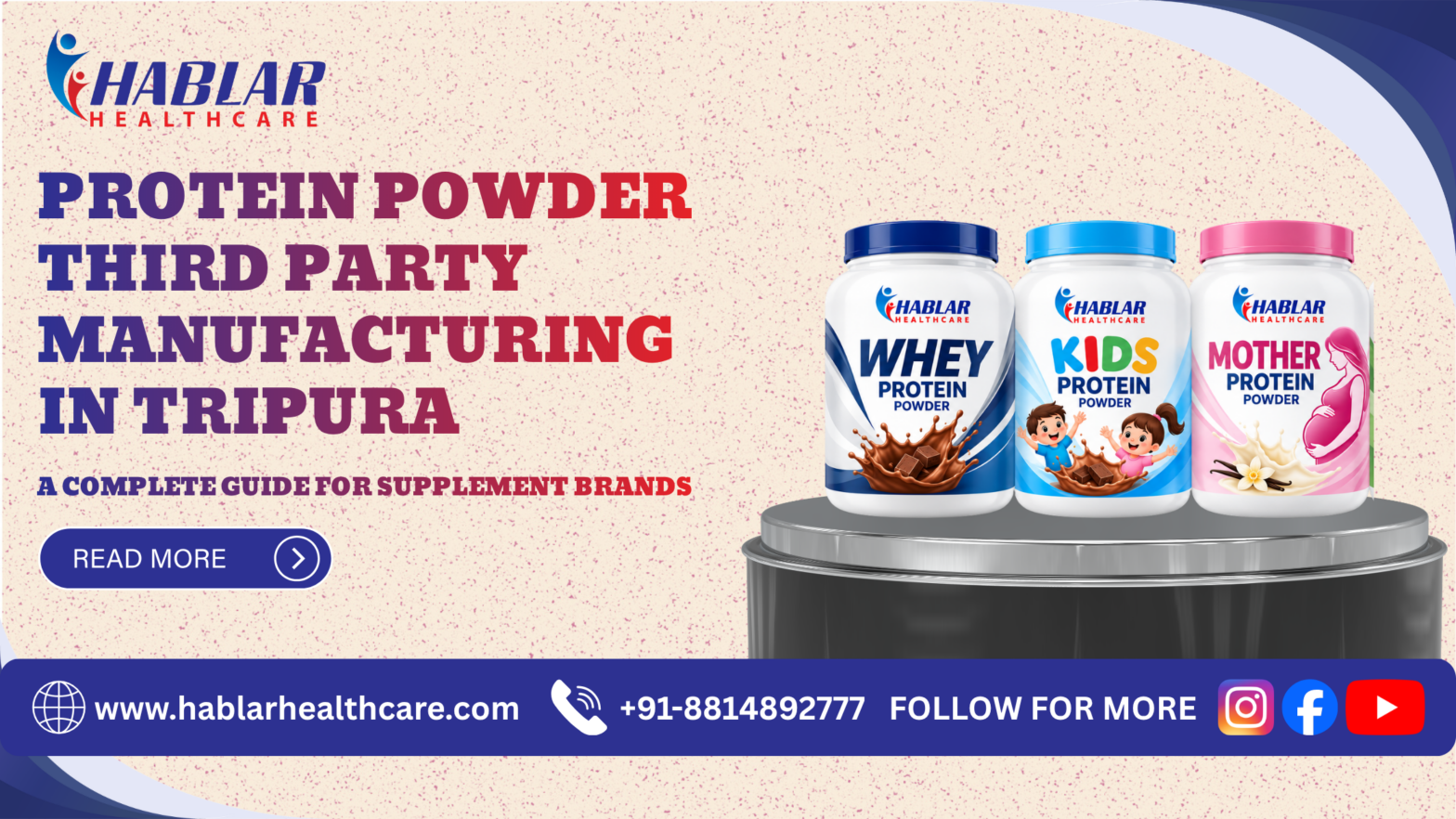
The demand for protein-based nutritional products is growing as consumers become more conscious of fitness, balanced nutrition, active lifestyles, and overall wellness. Protein powder third party manufacturing in Tripura offers a practical route for businesses that want to launch or expand their product portfolio.
From gym enthusiasts and athletes to working professionals and people looking for convenient nutritional support, protein powders have become an important part of the health supplement market.
This growing interest is also creating business opportunities for pharmaceutical distributors, nutraceutical entrepreneurs, healthcare companies, fitness supplement sellers, and new brand owners in Tripura. Businesses in cities such as Agartala, Udaipur, Dharmanagar, Kailashahar, and Belonia are exploring ways to introduce their own nutritional supplement brands without investing in manufacturing infrastructure.
Instead of setting up a production facility, a brand owner can work with an established third-party manufacturer to develop and manufacture products under its own brand name.
Hablar Healthcare supports businesses looking to explore nutraceutical and health supplement manufacturing opportunities. With the right manufacturing partner, product planning, packaging, and regulatory approach, businesses can build a protein supplement range suited to their target customers.
Understanding Protein Powder Third Party Manufacturing
Third-party manufacturing is a business arrangement in which a brand or marketing company outsources the production of its products to another manufacturing company.
The brand owner generally focuses on product selection, branding, marketing, distribution, and customer relationships, while the manufacturer manages the agreed manufacturing activities.
For example, a distributor operating in Agartala may want to introduce a whey protein powder under a new brand. Rather than establishing a manufacturing unit, the distributor can approach a suitable third-party manufacturer, finalise the product specifications, packaging, quantity, and commercial terms, and get the product manufactured under the agreed brand name.
This arrangement can help businesses reduce their initial investment in manufacturing infrastructure and concentrate on developing their market.
Why Is Protein Powder Demand Creating Business Opportunities in Tripura?
Tripura has a developing healthcare, pharmacy, fitness, and retail market. Growing awareness about nutrition and physical fitness is encouraging more consumers to explore protein-based supplements as part of their dietary routines.
Several factors are contributing to the potential growth of this category.
1. Growing Fitness Awareness
People are increasingly paying attention to exercise, gym training, sports, and physical activity. Protein supplements are often considered by fitness enthusiasts who want convenient ways to increase their dietary protein intake.
2. Expanding Nutritional Supplement Market
Health supplement retailers, pharmacies, wellness stores, and online sellers are exploring different nutritional categories. Protein powder can be an additional product category for businesses that already deal in healthcare or nutrition products.
3. Opportunities for Local Distributors
Distributors and stockists in Tripura can consider introducing their own supplement brands instead of depending entirely on established national brands. A well-planned product range can help them create a distinct market identity.
4. Scope for New Nutraceutical Entrepreneurs
Entrepreneurs who want to enter the health supplement industry may find third-party manufacturing useful because it allows them to explore a product business without setting up their own manufacturing plant.
5. Demand for Different Protein Formulations
Consumers do not all have the same nutritional preferences. Some look for whey protein, while others may prefer plant-based or specialised nutritional formulations. This creates opportunities for brands to develop products for different customer segments.
Types of Protein Powder Products to Consider
Before selecting a manufacturing partner, it is important to understand the types of protein powders available in the market. The right selection depends on the intended customer group, product positioning, formulation requirements, and budget.
1. Whey Protein Powder
Whey protein is one of the most recognised protein supplement categories. It is derived from milk and is commonly used in sports nutrition products.
Brands may explore different whey protein formulations depending on their target market and product specifications.
Common categories include:
- Whey protein concentrate
- Whey protein isolate
- Whey protein blends
- Flavoured whey protein powder
2. Plant-Based Protein Powder
Plant-based protein powders are designed for consumers looking for non-dairy protein options. These products can be developed using suitable plant protein ingredients.
Common protein sources include:
- Pea protein
- Soy protein
- Rice protein
- Other suitable plant-derived protein ingredients
The final formulation should be selected according to nutritional specifications, ingredient compatibility, taste, and applicable regulations.
3. Mass Gainer Powder
Mass gainer products are generally formulated with a combination of protein, carbohydrates, and other permitted ingredients. They are positioned for consumers seeking higher-calorie nutritional products.
The formulation and nutritional claims should be supported by appropriate product specifications and regulatory compliance.
4. Protein Powder for General Nutrition
Protein powders are not limited to the sports nutrition segment. Businesses can also explore products positioned for general nutritional supplementation, depending on the intended consumer group and applicable product category.
5. Specialised Protein Blends
Some brands may wish to develop customised protein blends with selected ingredients, flavours, and nutritional characteristics. Such formulations require careful consideration of ingredient quality, compatibility, stability, and labelling requirements.
Why Choose Protein Powder Third Party Manufacturing in Tripura?
Setting up a manufacturing facility requires substantial planning, investment, technical knowledge, equipment, trained personnel, and regulatory arrangements. For many emerging businesses, outsourcing production can be a more practical business model.
Here are some important advantages:
Lower Initial Infrastructure Investment
A business does not need to establish its own manufacturing plant when it works with a third-party manufacturer. This can reduce the initial financial burden associated with production infrastructure.
Focus on Marketing and Distribution
Brand owners can devote more time and resources to building dealer networks, connecting with retailers, developing promotional strategies, and understanding customer requirements.
Product Portfolio Expansion
Businesses already selling pharmaceutical, nutraceutical, or healthcare products can explore protein powders as an additional category.
Customised Branding and Packaging
Depending on the manufacturer’s capabilities and commercial terms, products may be developed with the brand owner’s selected name, artwork, packaging format, and product specifications.
Manufacturing Support
An experienced manufacturer may provide support with formulation selection, raw material sourcing, production planning, quality checks, and packaging coordination. The actual scope should be confirmed before placing an order.
How to Select the Right Protein Powder Manufacturer
Choosing a third-party manufacturing partner is one of the most important decisions when launching a supplement brand. A low quotation should not be the only deciding factor. Product quality, documentation, manufacturing capability, and communication are equally important.
Consider the following points before finalising a manufacturer.
1. Verify Manufacturing Licences and Compliance
Check whether the manufacturer holds the licences and approvals applicable to the product category and manufacturing activity.
For products regulated under FSSAI, verify the relevant FSSAI licence and ensure that the product formulation, ingredients, claims, and labels comply with applicable requirements.
Do not assume that a licence for one product category automatically covers every type of supplement.
2. Check Raw Material Quality
Protein powder quality depends significantly on the ingredients used. Ask about raw material specifications, supplier qualification, testing arrangements, and traceability.
Important considerations include:
- Protein source and grade
- Ingredient specifications
- Microbiological quality
- Contaminant testing, where applicable
- Ingredient authenticity and traceability
3. Understand the Manufacturing Process
Discuss the manufacturer’s production capabilities, blending process, hygiene practices, batch documentation, and packaging arrangements.
A professional manufacturer should be able to explain the relevant manufacturing and quality-control procedures.
4. Review Quality Testing
Ask which tests are performed on raw materials and finished products. Depending on the formulation and regulatory requirements, relevant tests may include protein content, moisture, microbiological parameters, and other product-specific quality checks.
Request appropriate test reports and batch documentation before accepting the finished goods.
5. Discuss MOQ and Pricing
Minimum order quantity can vary according to the formulation, ingredients, packaging material, flavour, and manufacturing requirements.
Before confirming an order, request a clear quotation covering:
- Minimum order quantity
- Product formulation
- Packaging material
- Printing and artwork charges
- Testing and documentation
- Taxes and transportation
- Expected production timeline
6. Evaluate Communication and Transparency
A dependable manufacturing partner should communicate clearly about product specifications, production schedules, documentation, payment terms, and responsibilities.
A written agreement can help avoid misunderstandings during the manufacturing process.
Step-by-Step Process for Launching Your Own Protein Powder Brand in Tripura
Starting a protein supplement brand becomes easier when the process is divided into manageable steps.
Step 1: Identify Your Target Market
Decide whether you want to target gym owners, fitness enthusiasts, pharmacies, healthcare distributors, wellness retailers, or online customers.
Your target market will influence the product type, price range, packaging, and marketing strategy.
Step 2: Select the Product Category
Choose the type of protein powder you want to introduce. You may begin with a single product and gradually expand your range after understanding market demand.
Step 3: Finalise Product Specifications
Discuss the protein source, nutritional composition, flavour, serving size, ingredients, and other technical requirements with the manufacturer.
Step 4: Select Brand Name and Packaging
Choose a distinctive brand identity and suitable packaging. Packaging should protect the product from moisture and contamination while providing adequate information to consumers.
Step 5: Review Regulatory Requirements
Ensure that the product category, manufacturing arrangement, label declarations, ingredient list, nutritional information, claims, and licences meet applicable regulations.
Step 6: Confirm Commercial Terms
Finalise the MOQ, pricing, payment terms, production schedule, packaging details, and responsibilities of both parties.
Step 7: Begin Distribution and Marketing
Once the finished product and documentation are ready, develop a distribution strategy for pharmacies, supplement retailers, gyms, fitness centres, and other relevant sales channels.
Important Quality and Regulatory Considerations
Protein powder is a food or health supplement product when manufactured and marketed under the applicable food regulatory framework. Businesses should not treat it as an ordinary commodity without considering the relevant compliance requirements.
For products falling under FSSAI regulations, brand owners and manufacturers should pay attention to the following areas:
Ingredient Compliance
Every ingredient used in the formulation should be permitted for the relevant product category and used within applicable conditions and limits.
Nutritional Information
The declared protein content and other nutritional values should be accurate and supported by appropriate testing and formulation records.
Product Claims
Claims such as high protein, source of protein, sugar-free, weight gain, muscle building, or other nutritional and health-related statements should be used only when they meet the applicable regulatory conditions.
Labelling Requirements
The label should carry all mandatory declarations applicable to the product, which may include:
- Name of the food
- Ingredient list
- Nutritional information
- Allergen declarations
- Net quantity
- Batch or lot number
- Date marking
- FSSAI licence details
- Manufacturer and marketer information, as applicable
- Customer care details
- Storage instructions
- Usage instructions, where applicable
The exact requirements depend on the product category and current regulations. Labels should be reviewed before printing.
Quality and Batch Traceability
Maintain appropriate records for raw materials, manufacturing batches, testing, packaging, and distribution. These records help businesses manage product quality and respond effectively to customer complaints or quality-related concerns.
Why Consider Hablar Healthcare for Protein Powder Third Party Manufacturing?
Selecting the right manufacturing partner can influence the quality, consistency, and long-term development of a supplement brand.
Hablar Healthcare works in the healthcare and nutraceutical business space and can be approached by businesses interested in exploring protein powder manufacturing opportunities.
For entrepreneurs and distributors in Tripura, the key is to identify a manufacturing arrangement that matches their product requirements, commercial expectations, and regulatory responsibilities.
When evaluating Hablar Healthcare or any potential manufacturing partner, discuss the following points:
- Available protein powder product categories
- Formulation and ingredient specifications
- Customisation possibilities
- Flavour and packaging options
- Minimum order quantity
- Product testing and quality documentation
- Applicable licences and regulatory compliance
- Production timelines and commercial terms
A clear discussion before placing an order helps both parties understand the project requirements and avoid unnecessary delays.
Business Opportunities Across Major Locations in Tripura
Businesses across Tripura can explore the protein supplement market through different sales and distribution channels.
Agartala
Agartala is an important commercial centre in the state. Supplement distributors, pharmacies, gyms, and healthcare retailers can explore protein powder products for their customer base.
Udaipur
Entrepreneurs and retailers in Udaipur can consider adding nutritional supplements to their existing healthcare or wellness product portfolio.
Dharmanagar
Businesses in Dharmanagar can explore opportunities in supplement distribution and retail through local pharmacy and fitness networks.
Kailashahar
Retailers and distributors in Kailashahar may consider introducing selected nutritional products based on local demand and customer preferences.
Belonia
Businesses in Belonia can explore protein supplements as part of a broader health and nutrition product range.
Ambassa and Other Areas
Emerging retailers and distributors in other parts of Tripura can also evaluate the category by studying customer demand, pricing, and product availability.
A business should always validate local demand before committing to large inventory quantities.
How to Build a Successful Protein Supplement Brand in Tripura
Manufacturing a good product is only one part of building a successful supplement business. Long-term growth also depends on distribution, brand credibility, customer education, and responsible marketing.
Here are some practical strategies.
Start With a Focused Product Range
Instead of launching too many products immediately, begin with a carefully selected range. A focused launch can make inventory management and marketing easier.
Build Relationships With Gyms and Fitness Centres
Gyms and fitness trainers can help brands understand consumer preferences. Any product promotion should remain responsible and should not include unsupported medical or performance claims.
Develop a Strong Retail Network
Connect with pharmacies, nutritional supplement stores, fitness retailers, and distributors to increase product availability.
Educate Customers
Provide clear information about ingredients, nutritional values, serving instructions, allergens, and storage conditions. Avoid misleading promises or exaggerated claims.
Maintain Consistent Product Quality
Consistency between batches is essential for building customer confidence. Work with manufacturers who maintain appropriate quality systems and provide relevant batch documentation.
Use Digital Marketing
A professional website, informative product pages, social media content, and search engine optimisation can help customers discover your brand.
Common Mistakes to Avoid When Choosing a Third-Party Manufacturer
New brand owners sometimes make decisions based only on the lowest price or fastest delivery commitment. This can create problems later.
Avoid these common mistakes:
- Selecting a manufacturer without verifying applicable licences.
- Ignoring raw material quality and finished product testing.
- Choosing a formulation without understanding the target customer.
- Printing labels before reviewing regulatory requirements.
- Making unsupported nutritional or health claims.
- Failing to clarify minimum order quantities and additional charges.
- Not defining quality responsibilities in a written agreement.
- Ordering large quantities without evaluating market demand.
- Ignoring packaging quality and product shelf-life requirements.
- Failing to maintain batch and distribution records.
A careful selection process can help reduce avoidable commercial and quality-related risks.
Future Scope of Protein Powder Third Party Manufacturing in Tripura
The nutraceutical sector offers opportunities for businesses that understand consumer needs and develop products responsibly. As awareness of nutrition and fitness continues to evolve, protein-based supplements may become an interesting category for distributors and entrepreneurs in Tripura.
The opportunity is not limited to established supplement sellers. Pharmaceutical distributors, pharmacy owners, wellness entrepreneurs, and new business entrants can also evaluate this segment.
However, long-term success will depend on more than simply launching a product. Businesses need suitable formulations, transparent labelling, quality-focused manufacturing, competitive pricing, and a reliable distribution network.
Third-party manufacturing can provide a practical starting point for companies that want to enter the category while keeping their primary focus on brand development and market expansion.
Conclusion
Protein powder third-party manufacturing in Tripura can be a promising business opportunity for entrepreneurs, distributors, healthcare companies, and supplement brand owners looking to enter the growing nutrition market.
By partnering with a suitable manufacturer, businesses can explore different protein formulations, develop products under their own brand names, and focus on building a strong distribution network.
Before selecting a manufacturing partner, always evaluate product quality, manufacturing licences, ingredient compliance, testing facilities, packaging options, minimum order quantity, and commercial terms.
Hablar Healthcare can be considered as a potential business contact for companies exploring protein powder and nutraceutical manufacturing opportunities. A well-planned approach, supported by responsible manufacturing and effective marketing, can help businesses establish a sustainable presence in Tripura’s nutritional supplement market.
Frequently Asked Questions (FAQs)
1. What is protein powder third-party manufacturing?
Protein powder third-party manufacturing is an arrangement in which a brand owner outsources the production of protein supplements to another manufacturing company. The products are manufactured under the agreed brand name and specifications.
2. Can I start my own protein powder brand in Tripura?
Yes, entrepreneurs and distributors in Tripura can explore launching their own protein powder brands by working with a suitable third-party manufacturer and meeting the applicable regulatory requirements.
3. Which protein powder products can be manufactured through third-party manufacturing?
Depending on the manufacturer’s capabilities and regulatory permissions, product options may include whey protein powder, plant-based protein, mass gainers, general nutritional protein powders, and customised protein blends.
4. Is third-party protein powder manufacturing suitable for startups?
It can be suitable for startups because it may reduce the need for investment in manufacturing infrastructure. However, businesses should evaluate MOQ, product cost, marketing expenses, regulatory requirements, and working capital before starting.
5. What is the minimum order quantity for protein powder manufacturing?
MOQ varies according to the product formulation, raw materials, flavour, packaging type, and manufacturing requirements. It should be confirmed directly with the selected manufacturer.
6. Can I manufacture protein powder under my own brand name?
Yes, private-label or third-party manufacturing arrangements may allow products to be manufactured under your brand name, subject to the agreed contract, applicable licences, and labelling requirements.
7. What documents should I check before selecting a protein powder manufacturer?
You should review the manufacturer’s applicable FSSAI licence, relevant manufacturing details, product specifications, quality-testing arrangements, batch documentation, and other documents required for the proposed product.
8. Is FSSAI approval required for protein powder products?
Products regulated as food or health supplements under the FSSAI framework must comply with applicable licensing, ingredient, product-category, and labelling requirements. The specific requirements depend on the product and the business activity.
9. Can protein powder formulations be customised?
Customisation may be possible depending on the manufacturer’s technical capabilities, ingredient availability, product category, and regulatory requirements. Formulation details should be discussed before confirming an order.
10. Which locations in Tripura can be served through a protein powder distribution business?
Businesses can explore distribution opportunities in Agartala, Udaipur, Dharmanagar, Kailashahar, Belonia, Ambassa, and other areas of Tripura, depending on their logistics and distribution arrangements.
11. How do I choose the right protein powder flavour?
Flavour selection should be based on target customers, product formulation, taste preferences, ingredient compatibility, and market research. Popular flavour options may include chocolate, vanilla, and other suitable flavours.
12. How can I promote my protein powder brand in Tripura?
You can develop a distribution network through pharmacies, gyms, fitness centres, nutrition stores, and online channels. Informative digital marketing and responsible product communication can also help build brand awareness.
13. What should I check before placing a protein powder manufacturing order?
Confirm the formulation, ingredient specifications, MOQ, pricing, packaging, label compliance, testing requirements, delivery timeline, payment terms, and quality responsibilities in writing.
14. Why is quality testing important in protein powder manufacturing?
Quality testing helps verify that the product meets its defined specifications and applicable safety and quality requirements. It also supports batch consistency, traceability, and customer confidence.
15. How can I contact Hablar Healthcare for protein powder manufacturing?
Businesses interested in exploring protein powder or nutraceutical manufacturing can contact Hablar Healthcare to discuss product requirements, formulation possibilities, packaging, MOQ, and commercial terms.
Hablar Healthcare – Your Business Contact for Nutraceutical and Protein Supplement Manufacturing Opportunities.