
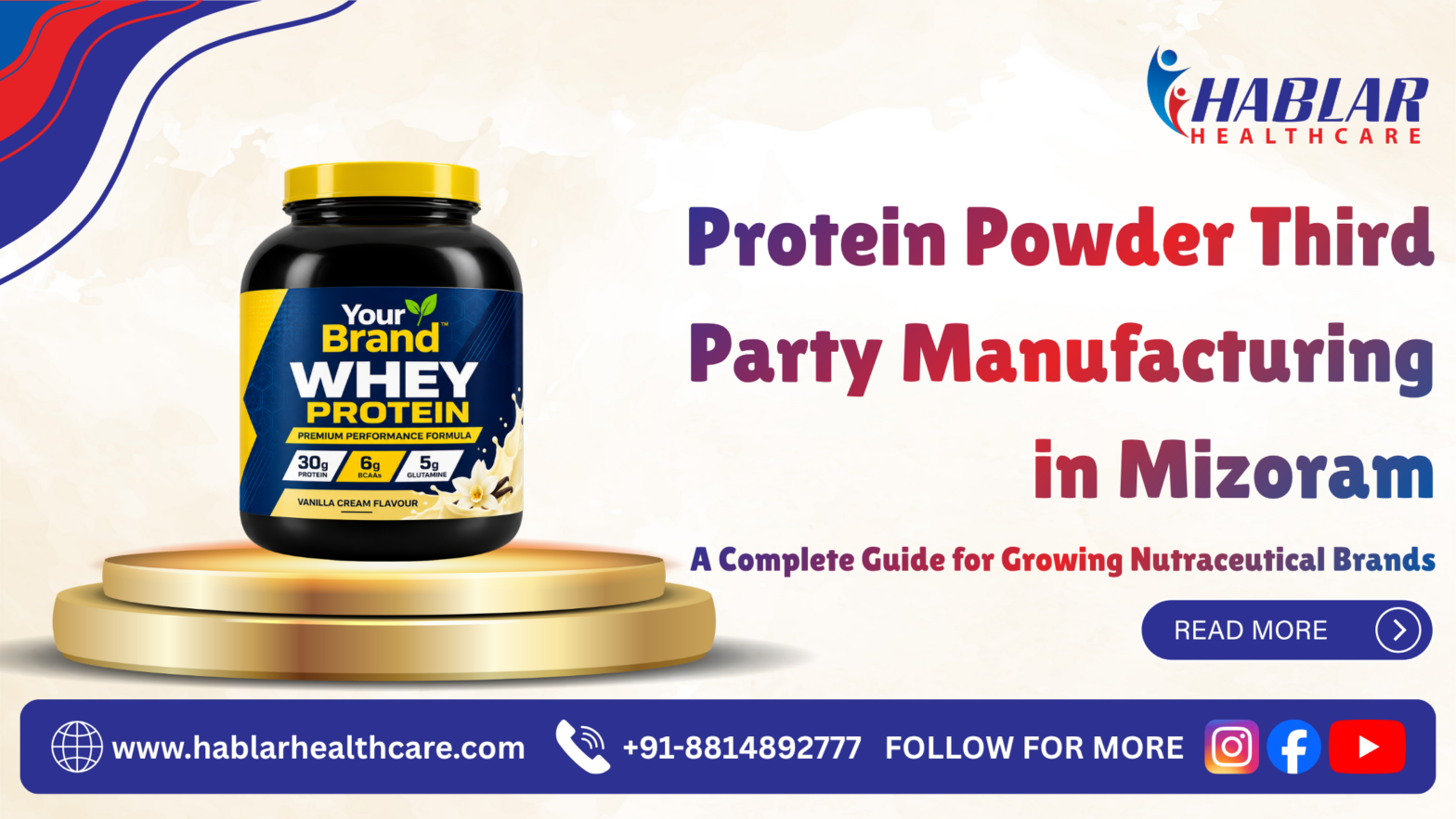
The demand for nutritional supplements is creating opportunities for entrepreneurs, distributors, fitness businesses, and healthcare companies looking to expand their product portfolios. For companies planning to introduce their own supplement range, protein powder third party manufacturing in Mizoram provides a business model that can reduce the need to establish an independent manufacturing facility.
In Mizoram, businesses interested in the health and wellness sector can explore protein powder products as part of a broader strategy to serve consumers seeking convenient nutritional options. Instead, a brand can work with a suitable third-party pharma manufacturer to develop, produce, and package products under its own brand identity, subject to applicable regulatory requirements.
Whether you are an established distributor in Aizawl, a new entrepreneur exploring the nutrition market, or a business planning to expand into Northeast India, choosing the right manufacturing partner is an important first step.
Hablar Healthcare works in the nutraceutical business space and can be approached to discuss potential manufacturing requirements, subject to confirmation of the specific product range and manufacturing capabilities.
This guide covers protein powder manufacturing options, private-label opportunities, quality considerations, regulatory requirements, and practical steps for launching a protein supplement brand in Mizoram.
Understanding Protein Powder Third Party Manufacturing in Mizoram
Third-party pharma manufacturing is a business arrangement in which one company outsources the production of its products to another manufacturing company. The finished products may be marketed under the brand owner’s name, depending on the agreement and applicable regulations.
Instead of investing in production equipment, a manufacturing facility, and an in-house production team, a business can concentrate on brand development, customer relationships, distribution, and marketing.
For example, a supplement distributor in Aizawl may want to launch a whey protein powder or plant-based protein supplement under a new brand. The distributor can explore working with a suitable manufacturer in India rather than building a production facility locally.
Depending on the manufacturer and product category, the manufacturing arrangement may include:
- Product formulation and ingredient selection
- Flavour development and sample preparation
- Powder blending and processing
- Packaging and private labelling
- Finished-product quality testing
- Product specifications and batch documentation
- Production planning and dispatch coordination
The exact scope should be agreed upon before placing an order. Businesses should also verify that the selected facility is authorised to manufacture the proposed product.
Why Consider Protein Powder Manufacturing for the Mizoram Market?
Mizoram offers opportunities for businesses interested in building regional distribution networks and introducing nutritional products through suitable retail and online channels. A focused business strategy can help entrepreneurs assess whether protein supplements fit their target customers and budget.
1. Develop Your Own Nutritional Supplement Brand
Private-label pharma manufacturing allows businesses to build their own brand identity without operating a dedicated production unit. Entrepreneurs can plan their brand name, packaging, product positioning, and distribution strategy while outsourcing production.
A distinctive brand identity, accurate product information, and consistent quality are important for building long-term customer confidence.
2. Explore Opportunities in Aizawl and Other Districts
Businesses can evaluate potential distribution opportunities in Aizawl, Lunglei, Champhai, Kolasib, Serchhip, and other locations across Mizoram.
Rather than assuming demand is the same everywhere, entrepreneurs should assess local retailers, potential distributors, customer preferences, and transportation costs before deciding their launch quantity.
3. Reduce Manufacturing Infrastructure Requirements
Setting up a manufacturing operation involves investment in machinery, premises, trained personnel, utilities, quality-control systems, and regulatory compliance.
Third-party manufacturing allows businesses to outsource production and focus their resources on sales, distribution, and brand building. However, it does not eliminate expenses associated with product development, inventory, packaging, marketing, and compliance.
4. Introduce Multiple Protein Product Categories
A business may begin with one carefully selected product and consider expanding into other protein powders after evaluating sales performance.
Potential options include whey protein, plant-based protein, protein blends, and selected nutritional powders. Product availability, formulation suitability, and regulatory classification must be confirmed with the manufacturer.
5. Build a Scalable Distribution Strategy
A protein supplement brand can explore suitable channels such as nutrition retailers, gyms, fitness centres, online marketplaces, and authorised distributors.
The best channel mix depends on the product’s price, intended audience, competition, and the business’s ability to manage inventory and customer service.
Types of Protein Powder Products to Consider
Selecting the right product is essential when developing a private-label protein supplement range. The following categories may be considered according to customer requirements, ingredient suitability, and manufacturing feasibility.
Whey Protein Powder
Whey protein is derived from milk and is commonly used in sports nutrition products. Depending on the formulation, businesses may consider whey protein concentrate, whey protein isolate, or a suitable blend.
Before selecting a product, evaluate protein content, ingredient quality, flavour, solubility, serving size, and the intended retail price.
Whey protein products must clearly communicate milk-derived ingredients and applicable allergen information.
Plant-Based Protein Powder
Plant protein powders may use protein sources such as pea or soy, depending on the formulation. Other ingredients may be considered where suitable and permitted.
These products can be positioned for customers who prefer plant-derived protein. Businesses should assess taste, texture, protein quality, allergen declarations, and the accuracy of any vegan or vegetarian claims.
Protein Blends
Protein blends combine multiple protein sources to achieve a particular nutritional or formulation objective. The suitability of a blend depends on the ingredient proportions, nutritional profile, taste, stability, and product specifications.
A manufacturer should provide sufficient information for the brand owner to evaluate the proposed formulation before commercial production.
High-Protein Nutritional Powders
These formulations may combine protein with carbohydrates, vitamins, minerals, or other permitted ingredients. They can be developed for specific nutritional positioning, provided the ingredients, quantities, claims, and product classification comply with applicable regulations.
Mass Gainer and Sports Nutrition Powders
Some brands may also evaluate mass gainer or sports nutrition products containing combinations of protein and carbohydrates.
These products should be formulated according to a clearly defined nutritional objective. Serving recommendations, energy values, ingredient declarations, and marketing claims must be accurate and compliant.
Not every protein product is suitable for every customer. Product selection should reflect the intended audience rather than relying on broad or unsupported health claims.
How to Choose the Right Protein Powder Third Party Manufacturer
Choosing a manufacturing partner requires more than comparing prices. Businesses should evaluate product suitability, quality systems, regulatory documentation, communication, and commercial reliability.
1. Verify the Manufacturing Licence
Confirm that the facility holds the licences applicable to the proposed product and manufacturing activity. For products regulated as food or health supplements, check the relevant FSSAI requirements and the authorised product scope.
Verify the actual manufacturing premises and applicable documentation before finalising an agreement.
2. Review Quality Control and Testing
Ask how the manufacturer evaluates raw materials, controls the production process, releases finished batches, and maintains traceability.
Depending on the formulation, relevant testing may include protein content, moisture, microbiological quality, contaminants, and other parameters established in the product specification.
Request appropriate test reports and clarify which tests are included in the quotation.
3. Discuss Product Formulation in Detail
Before selecting a protein powder, discuss the protein source, target protein content, serving size, flavour, sweeteners, additional ingredients, allergen profile, and nutritional declarations.
A clearly defined product specification helps prevent misunderstandings during sampling and commercial production.
4. Evaluate Packaging Options
Packaging should protect the product, suit its storage requirements, and support the intended brand positioning.
Depending on the product and manufacturer, possible options may include jars, tubs, pouches, or other suitable food-grade packaging formats.
Confirm the pack size, packaging material, closure system, label dimensions, and shipping suitability before approving the artwork.
5. Understand Minimum Order Quantity and Pricing
The minimum order quantity, commonly called MOQ, depends on the formulation, ingredient availability, packaging, flavour, and production setup.
Ask for a written quotation that clearly identifies:
- Minimum order quantity
- Product cost and packaging charges
- Sample development charges, if applicable
- Testing and documentation costs
- Artwork and label requirements
- Payment terms and production lead time
- Freight and dispatch arrangements
A lower unit price is not always the most economical option if it requires purchasing more inventory than the business can reasonably sell.
6. Confirm Documentation and Responsibilities
The manufacturing agreement should clarify responsibilities for product specifications, approved artwork, regulatory compliance, quality complaints, rejected batches, confidentiality, and intellectual property.
Businesses developing custom formulations should also clarify formula ownership and the conditions under which the formulation may be used by other parties.
Why Explore Protein Powder Manufacturing with Hablar Healthcare?
Hablar Healthcare is a relevant business contact for companies exploring nutraceutical manufacturing and private-label opportunities.
For a protein powder project targeting Mizoram, prospective clients can discuss their product concept, intended customer group, packaging preferences, expected order quantity, and commercial objectives.
Before proceeding, ask the team to confirm:
- Availability of the proposed protein powder formulation
- Manufacturing facility and authorised product scope
- Applicable licences and quality documentation
- Available flavours and packaging formats
- Minimum order quantity and pricing
- Product testing and batch documentation
- Production lead time and dispatch arrangements
These details should be confirmed directly rather than assumed from general manufacturing information. The most appropriate partner will be one whose verified capabilities match your product requirements.
Step-by-Step Process to Launch Your Protein Powder Brand in Mizoram
A structured launch process helps businesses manage costs, avoid unnecessary delays, and establish clear responsibilities.
Step 1: Research Your Target Market
Identify the customers you want to serve and assess the potential demand for your proposed product. Consider competitor pricing, available product categories, retailer feedback, and likely distribution costs.
Step 2: Select the Product Category
Decide whether you want to launch whey protein, plant-based protein, a protein blend, or another nutritional powder. Establish the desired nutritional profile and target price before requesting a quotation.
Step 3: Finalise Your Brand Name and Packaging
Create a distinctive brand identity, product name, and packaging concept. Check trademark availability and avoid printing commercial quantities of labels before the final regulatory review.
Step 4: Request Samples and Specifications
Where available, evaluate product samples for taste, texture, solubility, appearance, and overall suitability. Review the proposed formulation and nutritional information against your business requirements.
Step 5: Confirm Regulatory Compliance
Determine the correct product classification, applicable licences, ingredient requirements, labelling rules, and permitted advertising claims.
The manufacturer and brand owner should establish their respective responsibilities before production begins.
Step 6: Approve the Quotation and Manufacturing Agreement
Confirm the MOQ, price, packaging, testing arrangements, payment schedule, production lead time, and delivery terms in writing.
Step 7: Plan Distribution Across Mizoram
Identify suitable retailers, distributors, online channels, and other relevant sales partners. For deliveries outside major commercial centres, factor in transportation costs, stock planning, and storage conditions.
Step 8: Monitor Sales and Customer Feedback
After launch, review sales movement, repeat orders, customer feedback, and inventory levels. Use these insights to decide whether to continue, improve, or expand your product range.
Regulatory Requirements for Protein Powder Manufacturing in India
Regulatory compliance is an essential part of launching a protein powder brand. The applicable requirements depend on the formulation, product classification, manufacturing activity, and role of each business.
Before commercial production, businesses should review the following:
- Product classification: Establish whether the product is a conventional food, health supplement, nutraceutical, or another regulated category.
- Licensing: Confirm the required licences for the manufacturing facility and the brand owner’s activities.
- Ingredients: Verify that ingredients and their proposed levels are permitted for the intended category.
- Nutritional declarations: Ensure protein content, serving size, energy values, and other nutritional information are accurate and supported by appropriate data.
- Allergen information: Declare relevant allergens, such as milk or soy, where applicable.
- Labelling: Review ingredient lists, manufacturer and marketer details, licence information, batch identification, date marking, net quantity, MRP, consumer-care information, and other applicable declarations.
- Advertising claims: Avoid misleading claims or unsupported promises about muscle gain, disease treatment, or guaranteed results.
- Quality records: Maintain appropriate specifications, testing records, traceability, and complaint-handling procedures.
Frequently Asked Questions (FAQs)
1. What is protein powder third party manufacturing in Mizoram?
It is a business model in which a company outsources protein powder production to a suitable manufacturer and markets the finished product under its own brand, subject to the applicable regulations and agreement.
2. Can I start my own protein powder brand in Aizawl?
Yes, you can explore launching a protein powder brand in Aizawl by selecting a suitable product, finding an appropriately licensed manufacturer, finalising packaging, fulfilling regulatory requirements, and developing a distribution plan.
3. Do I need my own manufacturing factory?
Generally, a brand using third-party pharma manufacturing does not need to operate its own production facility. However, the brand owner must meet the licensing and other legal obligations applicable to its activities.
4. Which protein powders can be manufactured under my brand?
Depending on the manufacturer’s verified capabilities and the applicable regulations, possible categories include whey protein, plant-based protein, protein blends, and selected nutritional powders.
5. What is the MOQ for protein powder manufacturing?
There is no universal minimum order quantity. MOQ varies by formulation, ingredients, flavour, packaging, and manufacturing setup. Request a product-specific quotation before planning your investment.
6. How much does third-party protein powder manufacturing cost?
The price depends on protein source, formulation, protein concentration, additional ingredients, packaging, order quantity, testing, and freight. A quotation should be based on your exact product requirements.
7. Can I customise the flavour and packaging?
Customisation may be possible depending on the manufacturer’s capabilities, ingredient availability, formulation feasibility, and minimum order requirements. Confirm the available options before approving production.
8. Is FSSAI licensing required for protein powder?
Products regulated as food or health supplements must meet the applicable FSSAI requirements. The exact licensing and compliance obligations depend on the product classification and the activities performed by the manufacturer and marketer.
9. How long does protein powder manufacturing take?
The timeline depends on whether the formulation already exists, raw material availability, packaging procurement, artwork approval, testing, and production scheduling. Request a written timeline for your specific project.
10. Can I sell protein powder throughout Mizoram?
Distribution can be developed across Mizoram, subject to applicable legal requirements and suitable logistics. Businesses should assess demand, retailer availability, transportation costs, and storage conditions before expanding.
Conclusion
Protein powder third party manufacturing in Mizoram can provide a practical route for entrepreneurs, distributors, and established businesses looking to enter or expand within the nutritional supplement market.
The key to a sustainable business is choosing a suitable product, verifying the manufacturing partner, maintaining clear quality documentation, complying with applicable regulations, and building a distribution strategy around actual customer demand.
Whether you are planning a whey protein product, a plant-based formulation, or a broader nutritional powder range, careful planning can help you make informed decisions and avoid unnecessary investment.
Hablar Healthcare can be approached to discuss potential nutraceutical manufacturing requirements and private-label opportunities, subject to confirmation of product availability and manufacturing scope.
Planning to launch your own protein powder brand in Mizoram?
Contact Hablar Healthcare to discuss your product concept, packaging requirements, and third-party manufacturing enquiry.
Phone: +91-8814892777
Build your brand around a well-defined product, verified quality, accurate information, and a distribution strategy designed for long-term growth.