
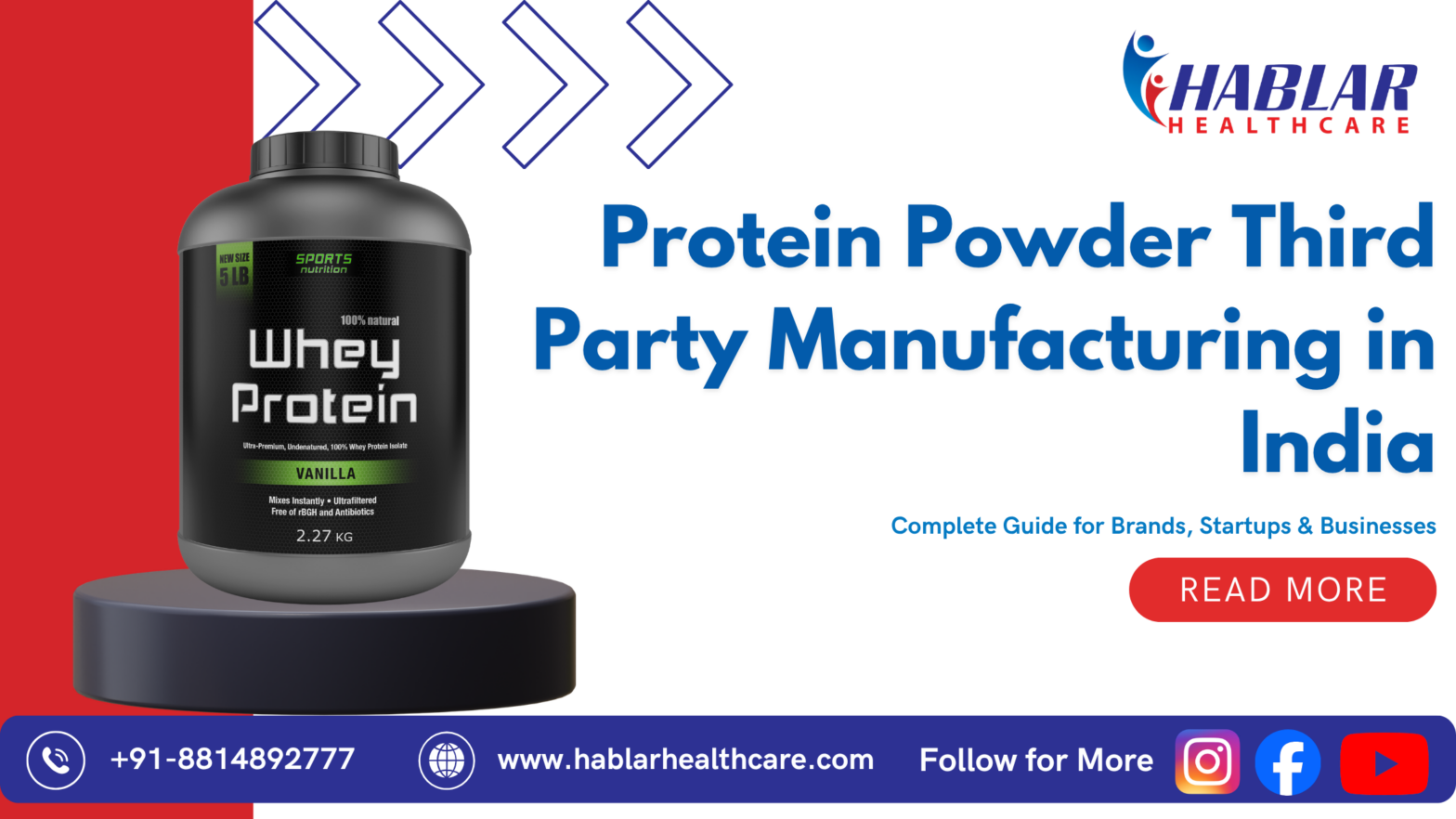
The demand for protein-based nutrition products in India has expanded rapidly across fitness, sports nutrition, wellness, active lifestyle and general nutritional supplementation. This has created a strong opportunity for businesses that want to launch their own protein powder brand without setting up a manufacturing plant. This is where protein powder third party manufacturing in India becomes an attractive business model.
Through third-party pharma manufacturing, a brand can work with an experienced manufacturer to formulate, manufacture, test, pack and supply protein powder under the brand owner’s name. It allows businesses to focus more on branding, marketing, distribution and sales while the manufacturing partner manages the production process.
For startups, emerging nutrition brands, gyms, healthcare companies, distributors and established FMCG or nutraceutical businesses, third-party manufacturing can provide a practical route to entering the protein supplement market.
In this guide, we explain how protein powder third-party manufacturing works, what products can be developed, important quality and regulatory considerations, packaging options, formulation requirements, pricing factors, and how to select the right manufacturing partner in India.
What Is Protein Powder Third Party Manufacturing in India?
Protein powder third party manufacturing in India is a business arrangement in which a manufacturing company produces protein powder products for another company or brand.
The brand owner generally provides or approves the product concept, formulation requirements, flavour, packaging and branding. The manufacturer then handles production according to the agreed specifications.
Depending on the agreement, the manufacturing partner may support:
- Product formulation
- Ingredient sourcing
- Raw-material testing
- Manufacturing
- Blending
- Quality control
- Finished-product testing
- Filling and packing
- Labelling support
- Batch documentation
- Dispatch and logistics coordination
The final product is marketed under the customer’s own brand name.
This model is particularly useful for businesses that do not want to invest heavily in manufacturing infrastructure at the beginning of their journey.
Why Choose Protein Powder Third Party Manufacturing in India?
India has a growing ecosystem of food, nutrition and supplement manufacturers, along with a large consumer market for protein products.
Instead of investing in machinery, production facilities, laboratories, warehouse infrastructure and a large technical team, a company can collaborate with an established manufacturer.
Key advantages include:
1. Lower Manufacturing Investment
Setting up an independent protein powder manufacturing facility requires substantial investment in equipment, premises, quality systems, utilities, manpower and regulatory compliance.
Third-party manufacturing allows brands to use existing manufacturing infrastructure instead.
2. Faster Brand Launch
An experienced manufacturer can already have production systems, procurement channels, packaging capabilities and quality-control procedures in place.
This can make the product development and launch process more streamlined.
3. Product Customisation
Brands can develop products based on their target market.
For example:
- Whey protein
- Plant protein
- Protein blends
- Mass gainer
- High-protein nutrition powder
- Protein powder with vitamins and minerals
- Women’s protein formulations
- Active lifestyle protein products
- Vegetarian protein formulations
The final formulation should always be evaluated for applicable food regulations and permissible ingredients and claims.
4. Professional Manufacturing Infrastructure
A suitable manufacturing partner can provide access to production equipment, trained personnel, quality-control systems and documented manufacturing procedures.
5. Private-Label Branding
The product can be developed for sale under the customer’s own brand, allowing the company to build its own identity instead of marketing another company’s finished brand.
Types of Protein Powders That Can Be Manufactured
One of the most important benefits of working with a third-party manufacturer is the ability to develop products for different consumer segments.
Whey Protein Powder
Whey protein is widely used in sports nutrition and active lifestyle products.
Depending on the formulation and specifications, brands may develop products based on different whey protein ingredients.
Whey Protein Concentrate
Whey protein concentrate can be used as a major protein source in various protein powder formulations.
The actual protein percentage, flavour system, nutritional profile and serving size should be determined according to the product specification.
Plant Protein Powder
Plant-based protein products are increasingly relevant for consumers looking for vegetarian or plant-based nutrition options.
Potential protein sources can include ingredients such as:
- Pea protein
- Soy protein
- Rice protein
- Other permitted plant protein ingredients
The suitability of each ingredient depends on the intended product category and applicable regulations.
Protein Blends
Manufacturers can also develop blends containing multiple protein sources to achieve a particular nutritional profile, texture or sensory characteristic.
Mass Gainer
Mass-gainer products generally combine protein with carbohydrate sources and may include additional nutrients depending on the formulation.
These products require careful formulation to achieve the desired calorie, protein, taste and solubility characteristics.
High-Protein Nutrition Powder
Protein powders can also be designed for general nutrition and active lifestyles rather than exclusively for bodybuilding.
FSSAI’s FAQ identifies protein supplements intended for the general population among products that may fall under the health-supplement category.
How Does Protein Powder Third Party Manufacturing Work?
The manufacturing process normally starts with product planning and ends with finished-product dispatch.
Step 1: Product Requirement Discussion
The brand discusses its requirements with the manufacturer.
Important points may include:
- Protein source
- Target protein percentage
- Serving size
- Flavour
- Sweetening system
- Pack size
- Target consumer
- Packaging format
- Expected order quantity
- Price positioning
Step 2: Formulation Development
The manufacturer or formulation team develops or reviews the proposed composition.
The formulation should be checked for:
- Ingredient suitability
- Nutritional composition
- Permitted ingredients
- Additives
- Allergen considerations
- Product category
- Labelling requirements
- Permitted claims
FSSAI maintains separate regulations covering health supplements/nutraceuticals, food standards and additives, advertising and claims, packaging, and labelling/display.
Step 3: Raw Material Selection
Protein quality depends significantly on the quality and consistency of incoming raw materials.
A responsible manufacturer should establish appropriate specifications and testing procedures for raw materials.
Depending on the material, quality checks may include:
- Identity
- Purity
- Protein content
- Microbiological parameters
- Moisture
- Heavy metals where applicable
- Other relevant specifications
Step 4: Trial Batch
A trial or development batch may be produced to assess:
- Taste
- Aroma
- Solubility
- Mouthfeel
- Colour
- Flow properties
- Nutritional composition
Feedback can then be incorporated into the final formulation.
Step 5: Quality Testing
The finished product should undergo appropriate quality testing against the established specifications.
The exact testing panel depends on the formulation, product category and applicable requirements.
Step 6: Packaging
After approval, the product is filled into the selected packaging.
Common options include:
- HDPE jars
- PET jars where suitable
- Laminated pouches
- Sachets
- Other appropriate food-grade packaging formats
Step 7: Labelling
The label needs to be prepared in accordance with applicable FSSAI requirements.
FSSAI currently maintains the Food Safety and Standards (Labelling and Display) Regulations, 2020, along with amendments.
Step 8: Final Dispatch
After completion of the required quality and documentation checks, the finished products can be dispatched according to the agreed commercial terms.
Protein Powder Formulation: What Should Brands Consider?
A protein powder is not simply a combination of protein and flavour.
A commercially successful product needs to balance nutrition, sensory characteristics, stability, cost and regulatory requirements.
Important formulation considerations include:
Protein Source
The protein source determines much of the product’s nutritional profile and positioning.
Protein Percentage
The target protein level should be established based on the intended product concept and applicable regulatory requirements.
Flavour
Popular flavour concepts may include:
- Chocolate
- Vanilla
- Strawberry
- Coffee
- Banana
- Mango
- Butterscotch
- Mixed berry
The flavour should complement the protein source and remain stable throughout the product’s shelf life.
Sweetening System
The sweetening system should be selected based on the formulation, target consumer and applicable regulations.
Solubility
Consumers generally expect protein powders to mix conveniently with water or milk. Proper ingredient selection and processing can influence dispersibility and mouthfeel.
Texture
Protein powders with poor texture can negatively affect consumer experience even when the nutritional composition is appropriate.
Shelf Stability
Moisture control, packaging selection, ingredient quality and storage conditions can all influence product stability.
Regulatory Considerations for Protein Powder Manufacturing in India
Regulatory compliance is one of the most important areas when launching a protein powder.
FSSAI maintains the regulatory framework governing food businesses in India, including licensing/registration, food standards and additives, health supplements and nutraceuticals, packaging, labelling and advertising/claims.
FSSAI also provides a Food Product Identity Verification System designed to help food businesses understand whether products fall within categories such as health supplements, nutraceuticals, food for special dietary use, functional foods and related categories.
Therefore, brands should not simply copy an existing protein powder composition and assume that the same regulatory treatment applies.
The formulation and claims should be evaluated according to the actual ingredients, intended use and product category.
Importance of FSSAI Compliance
For a protein powder business, regulatory compliance should be considered from the formulation stage itself rather than after the packaging design has already been completed.
Important areas may include:
- Appropriate FSSAI licensing
- Product category
- Permitted ingredients
- Ingredient quantities
- Additives
- Nutritional information
- Labelling
- Allergen declarations where applicable
- Claims
- Packaging
- Batch information
- Storage instructions
- Other mandatory declarations
FSSAI’s official regulations page provides the current regulatory framework and notes that the original Gazette notifications/amendments prevail where there is any discrepancy with the consolidated compendium.
Because food regulations can change, brands should verify the latest requirements before finalising a formulation or label.
Protein Powder Packaging Options
Packaging plays two roles: protecting the product and communicating the brand.
A manufacturer may offer several packaging formats depending on product requirements.
Protein Jars
Jars are commonly used for premium protein products and can provide a strong shelf presence.
Protein Pouches
Pouches can be useful for products positioned around convenience and value.
Single-Serve Sachets
Sachets can be considered for trial packs, travel packs or single-serving formats.
Custom Packaging
Brands may also develop custom packaging with:
- Brand logo
- Product name
- Flavour
- Nutritional information
- Usage instructions
- Required declarations
- Manufacturing details
- Batch information
Packaging material should be appropriate for the product and its storage conditions.
How to Select the Right Protein Powder Manufacturer in India
Choosing a manufacturing partner is one of the most important decisions for a new nutrition brand.
Do not select a manufacturer only on the basis of the lowest quotation.
Consider the following factors:
1. Manufacturing Infrastructure
Review whether the manufacturer has suitable facilities and equipment for powder manufacturing.
2. Quality Control
Ask about the manufacturer’s quality-control procedures and testing capabilities.
3. Regulatory Support
A manufacturer with regulatory understanding can help identify potential issues before the product reaches the market.
4. Formulation Development
If you have only a product concept rather than a finished formulation, formulation-development support can be valuable.
5. Packaging Capability
Check whether the manufacturer can provide the packaging format and pack sizes you require.
6. Documentation
Ask about relevant batch and quality documentation available with the finished product.
7. Manufacturing Capacity
The manufacturer’s capacity should match your expected demand and future growth.
8. Transparency
A professional manufacturer should be able to clearly explain:
- Product specifications
- Manufacturing process
- Testing
- Packaging
- Minimum order requirements
- Lead time
- Commercial terms
What Documents Should You Ask From a Protein Powder Manufacturer?
Before finalising a manufacturing arrangement, businesses should discuss the documentation required for their product.
Depending on the product and agreement, documents may include:
- Product specification
- Ingredient composition
- Certificate of Analysis
- Batch manufacturing records
- Packaging specifications
- Finished-product test reports
- Shelf-life/stability-related documentation where applicable
- FSSAI licence details
- Other agreed quality documents
The exact documentation package can differ based on the product, manufacturer and commercial arrangement.
Minimum Order Quantity for Protein Powder Manufacturing
MOQ is an important consideration for startups.
There is no universal MOQ for every protein powder manufacturer.
MOQ can depend on:
- Product formulation
- Protein source
- Flavour
- Packaging
- Jar or pouch size
- Printing requirements
- Raw-material procurement
- Batch size
- Number of SKUs
A startup should ask for the MOQ for each proposed SKU rather than assuming that one manufacturer’s MOQ applies to all products.
Protein Powder Manufacturing Cost in India
The cost of manufacturing a protein powder depends on several variables.
Some major cost drivers include:
Raw Materials
The protein source can significantly affect the cost of the finished formulation.
Formula
Additional ingredients, vitamins, minerals, flavours and functional ingredients may change the cost.
Packaging
Jars, lids, labels, scoops, pouches, cartons and printing specifications influence the final price.
Order Quantity
Larger production quantities may change manufacturing economics.
Testing
Product testing and quality-control requirements also contribute to the overall cost.
Product Complexity
A simple protein formulation and a multi-ingredient functional protein product will not necessarily have the same manufacturing cost.
Therefore, businesses should request a product-specific quotation instead of relying on generic “per kg” rates found online.
Private Label Protein Powder vs Third Party Manufacturing
These terms are often used interchangeably, but businesses should clarify exactly what the manufacturer is offering.
Private Label
A manufacturer may offer an existing or standardised formulation that can be marketed under the customer’s brand, subject to the applicable regulatory and commercial arrangement.
Third Party Manufacturing
The manufacturer produces the product for the brand according to agreed specifications.
Custom Manufacturing
The brand may have greater involvement in formulation, ingredients, flavour, nutritional targets and packaging specifications.
Before placing an order, confirm exactly what is included in the manufacturer’s service.
Why Quality Matters in Protein Powder Manufacturing
Protein products are consumed as nutritional products, making quality consistency extremely important.
A reliable manufacturing system should focus on:
- Raw-material quality
- Correct weighing
- Batch consistency
- Proper blending
- Microbiological control
- Moisture control
- Packaging integrity
- Traceability
- Finished-product testing
Quality should not be evaluated only by the appearance of the jar or the design of the label.
The underlying manufacturing and quality systems are equally important.
Building Your Own Protein Powder Brand
Third-party pharma manufacturing can be useful for entrepreneurs who want to establish their own nutrition brand.
A typical brand-building process may include:
Market Research → Product Concept → Formulation → Regulatory Review → Sampling → Packaging → Manufacturing → Quality Testing → Launch → Marketing → Distribution
A successful protein brand usually requires more than simply placing a logo on a protein jar.
Businesses should develop a clear positioning strategy around:
- Target consumer
- Protein source
- Nutritional profile
- Flavour
- Price segment
- Pack size
- Brand identity
- Distribution strategy
Protein Powder Manufacturing for Startups
Startups often face three challenges:
- Limited manufacturing infrastructure
- Limited technical expertise
- Limited initial investment
Third-party manufacturing can help address these challenges by providing access to established manufacturing capabilities.
A startup can begin with a focused product range and expand its portfolio based on market response.
For example, a brand may initially launch:
- 1–2 protein flavours
- One or two pack sizes
- A core whey or plant protein product
It can later expand into additional flavours, protein blends, mass gainers and other nutrition products.
Common Mistakes to Avoid
Choosing Only on Price
The cheapest quotation may not provide the desired quality, documentation or service.
Finalising Artwork Too Early
Labels should be reviewed against the final formulation and applicable regulatory requirements before printing.
Ignoring Ingredient Compliance
Every ingredient should be evaluated for its suitability in the intended product category.
Making Unsupported Claims
Marketing claims should be checked against applicable requirements. FSSAI maintains dedicated regulations concerning advertising and claims.
Ordering Too Many SKUs Initially
Launching numerous flavours and pack sizes can increase inventory and working-capital requirements.
Not Checking Samples
Product samples should be evaluated for taste, texture, solubility and overall consumer experience before commercial production.
Why India Is a Practical Market for Protein Powder Brands
India has a large and diverse consumer base, ranging from professional athletes and gym users to consumers interested in active lifestyles and general nutrition.
This creates opportunities for different product segments, including:
- Sports nutrition
- Fitness nutrition
- Plant protein
- Women’s nutrition
- General protein supplementation
- Premium protein
- Value-oriented protein
- Mass gainers
The opportunity, however, needs to be matched with proper product development, quality control, regulatory compliance and brand positioning.
Why Choose a Reliable Third Party Protein Powder Manufacturer?
A good manufacturing partner can become more than a supplier.
For growing brands, the right partner can support:
- Product development
- Ingredient sourcing
- Manufacturing
- Quality testing
- Packaging
- Regulatory coordination
- Batch documentation
- Scale-up
- Repeat production
The objective should be to develop a long-term manufacturing relationship rather than simply searching for the lowest manufacturing quotation.
Frequently Asked Questions About Protein Powder Third Party Manufacturing in India
1. What is protein powder third party manufacturing?
It is a manufacturing arrangement in which a manufacturer produces protein powder for another business or brand according to agreed product, quality, packaging and commercial specifications.
2. Can I launch my own protein powder brand without owning a factory?
Yes. Third-party manufacturing allows a brand to outsource production to a suitable manufacturer instead of establishing its own manufacturing facility.
3. Can protein powder be manufactured under my brand name?
Yes, subject to the applicable manufacturing and regulatory arrangement, protein powder can be produced and marketed under a customer’s brand.
4. What types of protein powders can be manufactured?
Depending on the manufacturer’s capabilities and applicable regulations, products may include whey protein, plant protein, protein blends, high-protein nutrition powders and mass-gainer-type products.
5. Can I customise the protein powder formulation?
Many manufacturers provide formulation-development or customisation services. The final composition should be reviewed for ingredient suitability and regulatory compliance.
6. Can I choose the flavour?
Yes. Protein powders can generally be developed in different flavour profiles, subject to formulation feasibility and ingredient compatibility.
7. What packaging options are available?
Depending on the manufacturer, options may include jars, pouches and single-serve sachets.
8. What is the MOQ for protein powder manufacturing?
MOQ varies by manufacturer and product. It can depend on formulation, raw materials, packaging, batch size and the number of SKUs.
9. How much does protein powder third party manufacturing cost in India?
There is no single fixed price. Cost depends on protein source, formulation, ingredients, packaging, order quantity, testing and other production requirements.
10. Is FSSAI approval important for protein powder?
Yes. Protein products marketed as food/health supplements need to comply with the applicable FSSAI framework. FSSAI provides specific regulations and guidance covering health supplements, nutraceuticals, licensing, labelling, packaging and claims.
Final Thoughts
Protein powder third party manufacturing in India provides an opportunity for entrepreneurs, startups, healthcare businesses, fitness brands and established companies to enter the growing nutrition market without building their own manufacturing infrastructure.
The key to a successful product is not simply finding a manufacturer with a low quotation. A stronger approach is to evaluate the complete manufacturing ecosystem—from formulation and raw-material quality to testing, packaging, documentation and regulatory compliance.
Before placing a commercial order, clearly define your product requirements, verify the manufacturer’s capabilities, review the formulation and artwork, understand the MOQ and commercial terms, and ensure that the product is manufactured and labelled according to the applicable regulations.
With the right formulation, quality-focused manufacturing partner, attractive packaging and a well-planned brand strategy, businesses can develop protein powder products tailored to their target market and build a scalable nutrition brand in India.
If you are planning to launch your own protein powder brand, the first step is to define your protein source, target protein content, flavour, pack size, positioning and expected order quantity. These details can then be shared with a suitable third-party manufacturer for formulation, sampling and commercial evaluation.