
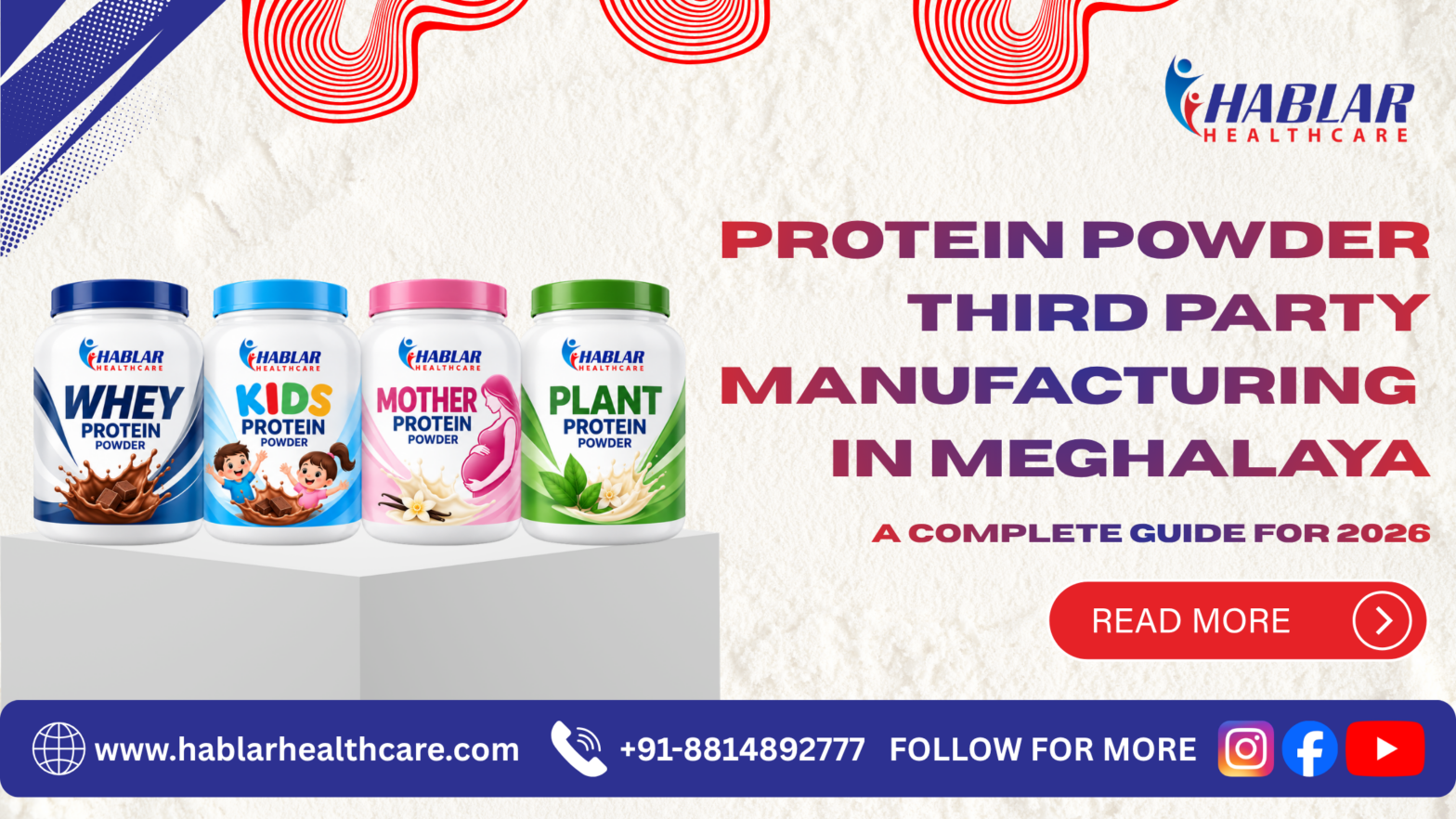
The health and nutrition industry offers business opportunities for entrepreneurs who want to establish their own protein supplement brands. This comprehensive guide explains protein powder third party manufacturing in Meghalaya, product options, private labelling, manufacturing costs, regulatory considerations, frequently asked questions, and practical steps for launching your own protein supplement brand.
For distributors, fitness entrepreneurs, retailers, and emerging nutraceutical businesses in Meghalaya, protein powder third-party manufacturing provides a way to enter this market without investing in an independent manufacturing facility.
Whether you are planning to launch a whey protein brand in Shillong, introduce plant-based protein products in Tura, or expand your nutrition distribution business across Meghalaya, choosing the right manufacturing partner is an important first step.
Hablar Healthcare is a relevant contact for businesses exploring third-party nutraceutical manufacturing opportunities. Before beginning a project, brands should evaluate product specifications, manufacturing capabilities, quality documentation, packaging options, and applicable food safety requirements.
What Is Protein Powder Third-Party Manufacturing?
Protein powder third-party manufacturing is a business arrangement in which a manufacturer produces a protein supplement for another company under an agreed commercial and branding arrangement.
The brand owner can focus on marketing, sales, customer relationships, and distribution while the contracted manufacturer carries out the production activities covered by the agreement.
Depending on the manufacturer’s facilities and services, the arrangement may include:
- Protein powder formulation and product development.
- Ingredient sourcing and blending.
- Flavour selection and product consistency checks.
- Powder filling and packaging.
- Quality testing and batch documentation.
- Private-label product development.
- Support with product specifications and manufacturing records.
The services offered vary by manufacturer, so businesses should confirm the exact scope before placing an order.
For entrepreneurs in Meghalaya, this model can be a practical option for exploring the nutritional supplement market without establishing a production facility of their own.
Why Consider Protein Powder Manufacturing for the Meghalaya Market?
Meghalaya has a diverse business landscape, with opportunities for retailers, distributors, fitness businesses, and entrepreneurs interested in consumer nutrition products. Businesses considering protein supplements should identify their target customers and assess local demand before investing in a new brand.
1. Launch Your Own Protein Powder Brand
Third-party manufacturing can help entrepreneurs develop a brand with their own name, packaging design, and product positioning.
For example, a business in Shillong may wish to introduce a sports nutrition range for fitness customers, while a distributor in Tura may explore adding nutritional supplements to an existing product portfolio.
The actual product offering should be based on customer research, manufacturing feasibility, and regulatory requirements.
2. Serve Different Nutrition Preferences
Protein supplements are available in different formulations to suit varying dietary preferences.
Depending on the product and target audience, businesses may explore whey protein, plant-based protein, protein blends, or other permitted nutritional powder formulations.
Selecting a clear target segment makes it easier to develop a suitable product and communicate its benefits accurately.
3. Reduce Initial Manufacturing Infrastructure Requirements
Establishing a production unit involves investment in machinery, premises, personnel, hygiene systems, quality controls, and regulatory compliance.
Third-party manufacturing may reduce the need for this infrastructure investment. However, the brand owner still needs to budget for production orders, packaging, transportation, marketing, licensing obligations, and working capital.
4. Develop a Product Range Gradually
A new brand does not necessarily need a large portfolio at launch.
Starting with one carefully selected product can help a business evaluate customer response, pricing, repeat purchases, and distribution performance before expanding into additional protein or nutritional powder categories.
Types of Protein Powder You Can Develop
The choice of protein source influences the product’s nutritional profile, taste, texture, positioning, and cost.
Whey Protein Powder
Whey protein is derived from milk and is widely used in sports nutrition.
Potential product concepts include whey protein concentrate, whey protein isolate, and blended formulations. The suitability of each option depends on the intended protein content, ingredient specifications, customer preferences, and budget.
When evaluating whey protein, check the declared protein content, ingredient quality, flavour, solubility, and finished-product testing arrangements.
Plant-Based Protein Powder
Plant-based protein may appeal to customers seeking dairy-free options or products made from plant-derived ingredients.
Depending on the formulation, possible protein sources include pea protein, soy protein, and other suitable plant proteins.
Consider the amino acid profile, allergen information, taste, texture, ingredient compatibility, and the accuracy of nutritional declarations before selecting a formula.
Protein Blends
Protein blends combine two or more protein sources to achieve a particular nutritional or sensory profile.
A well-developed blend should have a clear product specification and appropriate quality controls. Combining multiple protein sources does not automatically make a product nutritionally superior.
Mass Gainer Powder
Mass gainer products typically combine protein with carbohydrates and other ingredients to provide more calories per serving.
These products may appeal to certain physically active adults seeking a convenient source of additional dietary energy. The actual nutritional profile depends on the formulation and serving size.
Specialised Nutritional Powders
Businesses may also explore other nutritional powder concepts, subject to product classification, ingredient eligibility, safety, and applicable regulations.
Products intended for children, pregnant or breastfeeding women, or individuals with specific medical needs require particular care. They should not be developed or marketed using unsupported health claims.
How Does Protein Powder Third-Party Manufacturing Work?
A structured process helps businesses move from an initial idea to a commercially viable product.
Step 1: Identify Your Product Requirements
Decide which type of protein powder you want to launch.
Prepare a product brief covering:
- Protein source and desired nutritional profile.
- Flavour and serving size.
- Intended consumer group.
- Preferred packaging format.
- Target selling price.
- Estimated order quantity.
- Delivery location in Meghalaya.
This information helps the manufacturer assess the feasibility of your request.
Step 2: Finalise the Formulation
Discuss the proposed formula with the manufacturer and relevant regulatory professionals.
Confirm the ingredients, nutritional specifications, permitted additives, flavour system, allergen declarations, and any additional ingredients.
The final formulation should be evaluated as a complete product rather than selected solely on the basis of its advertised protein percentage.
Step 3: Verify the Manufacturing Partner
Before committing to an order, check the manufacturer’s relevant FSSAI licence, authorised product scope, production capabilities, quality systems, and experience with the proposed formulation.
Ask about raw material traceability, batch records, finished-product testing, complaint management, and product recall procedures.
Step 4: Finalise Branding and Packaging
Choose a suitable brand name, logo, colour scheme, packaging format, and label design.
Packaging options may include tubs, jars, and pouches, depending on product compatibility and the manufacturer’s capabilities.
The label should be reviewed for applicable regulatory requirements before it is printed.
Step 5: Approve Samples and Specifications
Where sampling is available, assess the product’s taste, aroma, texture, mixability, and packaging suitability.
Agree on written product specifications and appropriate quality tests before authorising commercial production.
Step 6: Confirm the Order and Commercial Terms
Obtain written details covering the minimum order quantity, manufacturing price, packaging charges, testing responsibilities, payment terms, production timeline, and transportation arrangements.
Ensure that responsibilities for product approval, label compliance, quality complaints, and recalls are clearly defined.
Step 7: Build Your Distribution Network
Once the product is manufactured and released in accordance with the agreed requirements, plan how you will reach customers.
Potential channels include nutrition retailers, fitness centres, distributors, online marketplaces, and direct-to-consumer sales, subject to applicable requirements.
For Meghalaya businesses, distribution planning should account for delivery costs, inventory management, and reliable product availability.
How to Choose a Reliable Protein Powder Manufacturer
Choosing a manufacturing partner based only on the lowest quotation can create unnecessary risks.
Use the following checklist when comparing suppliers.
| Factor | What to check |
|---|---|
| Licensing | Relevant FSSAI licence and permitted product scope |
| Manufacturing capability | Experience with the specific protein powder category |
| Ingredients | Supplier documentation and raw material specifications |
| Quality control | Suitable testing and batch-release procedures |
| Protein content | Analytical support for the declared nutritional values |
| Packaging | Food-contact suitability, sealing, and moisture protection |
| Documentation | Applicable specifications, test reports, and batch records |
| Supply reliability | Production timelines and dispatch arrangements |
| Commercial terms | MOQ, price, payment terms, and additional charges |
| Customer support | Complaint investigation and recall procedures |
Verify certificates and licences directly wherever possible. A general certification claim does not establish that every product manufactured at a facility meets all applicable requirements.
FSSAI Requirements for Protein Powder Brands
Food safety compliance is a critical part of launching a protein powder brand in India, including Meghalaya.
The applicable requirements depend on the formulation, intended use, product classification, and business activities. Certain products may fall under the Health Supplements and Nutraceuticals Regulations, 2016, while others may be governed by different applicable food standards.
Before commercialising a product, verify:
- The appropriate product category and ingredient eligibility.
- The manufacturing and marketing business’s applicable FSSAI licensing requirements.
- Compliance with permitted ingredient levels and relevant product standards.
- Nutritional information and ingredient declarations.
- Allergen declarations, including milk or soy where relevant.
- Mandatory warnings, directions for use, and serving information where applicable.
- Batch identification, traceability, and shelf-life requirements.
- Compliance of advertising and health claims with applicable regulations.
Private-Label Protein Powder Manufacturing in Meghalaya
Private-label pharma manufacturing allows a business to sell a product under its own brand name, subject to the agreed arrangement and applicable regulations.
For example, a distributor in Shillong may wish to introduce a branded whey protein powder, while an entrepreneur serving customers across Meghalaya may prefer to develop a plant-based nutrition product.
Before finalising a private-label arrangement, confirm the following:
Brand ownership: Establish who owns the brand name, trademark, logo, and packaging artwork.
Formula ownership: Clarify whether the formula is standard, customised, or exclusive under a written agreement.
Regulatory responsibilities: Identify which party is responsible for applicable licences, label approval, and compliance.
Quality documentation: Agree on the specifications, testing records, batch documentation, and product release process.
Supply and delivery: Confirm the order quantity, manufacturing schedule, transportation terms, and procedures for handling delays.
Complaints and recalls: Define how product complaints, quality concerns, returns, and recalls will be managed.
Written terms help protect both the brand owner and the manufacturer and provide a clearer basis for long-term business relationships.
Protein Powder Manufacturing Cost in Meghalaya
The cost of protein powder third-party manufacturing depends on the product specification and the commercial arrangement. There is no single price applicable to every brand.
The main cost factors include:
- Protein source: Whey concentrate, whey isolate, plant proteins, and blends have different raw material costs.
- Protein concentration: The specified protein content can influence the quantity and cost of ingredients.
- Flavour and formulation: Flavour systems, sweeteners, and additional ingredients affect the final formula cost.
- Order quantity: The manufacturing volume and packaging format can influence the unit price.
- Packaging: Jars, tubs, pouches, labels, scoops, and cartons contribute to the total cost.
- Testing and documentation: Product-specific quality checks and compliance activities may affect the quotation.
- Transportation: Freight and delivery to Meghalaya should be considered when calculating the landed cost.
Request a written quotation that clearly separates manufacturing, packaging, testing, transportation, taxes, and any applicable development charges.
Comparing quotations against the same formulation and packaging specification will provide a more useful picture of the actual cost.
How to Start Your Own Protein Powder Business in Meghalaya
A new protein supplement business benefits from careful planning before the first order is placed.
Research Your Customers
Identify the customers you want to serve, such as fitness enthusiasts, supplement retailers, distributors, or online buyers.
Conduct market research instead of assuming that a particular protein category will automatically sell well.
Select a Focused Product
Choose a product with a clear purpose, appropriate nutritional specifications, and a realistic price position.
A focused launch can make it easier to understand demand and manage inventory.
Calculate the Complete Business Cost
Include manufacturing, packaging, freight, taxes, distribution margins, marketing, and working capital.
Avoid basing the business plan only on the manufacturer’s quoted unit price.
Check the Manufacturer’s Documentation
Verify licences, product capabilities, testing procedures, and agreed responsibilities before making a substantial financial commitment.
Plan Distribution and Inventory
Estimate realistic sales volumes, delivery timelines, and inventory requirements. A suitable stock plan can help reduce the risk of shortages or excessive unsold stock.
Expand Based on Actual Performance
Review sales, customer feedback, repeat orders, and product complaints before investing in additional flavours or product categories.
Why Consider Hablar Healthcare for Your Protein Powder Project?
Businesses exploring protein powder third-party manufacturing need a partner that can assess the proposed product, clarify its manufacturing scope, and establish transparent commercial and quality requirements.
Hablar Healthcare is a contact point for businesses interested in exploring third-party nutraceutical manufacturing opportunities.
When enquiring about a protein powder project, share your preferred protein source, desired nutritional profile, flavour, packaging size, estimated quantity, and delivery location in Meghalaya.
These details can help establish whether the proposed product and order are feasible. Before placing an order, confirm the relevant manufacturing capabilities, licensing scope, minimum quantity, quality documentation, pricing, and delivery terms directly with the company.
The objective should be to establish a consistent, compliant, and commercially sustainable product rather than choosing a supplier solely on price.
Frequently Asked Questions (FAQs)
1. What is protein powder third-party manufacturing in Meghalaya?
It is an arrangement in which a manufacturer produces protein powder for a business that sells it under its own brand, subject to the agreed terms and applicable regulations. Businesses in Meghalaya can explore this model without establishing their own production plant.
2. Can I start a protein powder brand in Shillong?
Yes, you can explore launching a protein powder brand in Shillong, provided you meet the applicable business, licensing, food safety, labelling, and marketing requirements.
3. Does Hablar Healthcare manufacture protein powder for private labels?
Businesses can contact Hablar Healthcare to discuss their protein powder and nutraceutical manufacturing requirements. Confirm the current product range, manufacturing capabilities, minimum order quantity, and commercial terms directly before proceeding.
4. What types of protein powder can I launch?
Potential options include whey protein concentrate, whey protein isolate, plant-based protein, protein blends, and mass-gainer formulations. Availability depends on manufacturing capabilities, product specifications, and regulatory suitability.
5. Is a manufacturing factory necessary to start a protein powder business?
Not necessarily. A business may work with a suitable third-party manufacturer rather than establish its own production facility. Applicable licensing and other obligations still need to be fulfilled.
6. What is the minimum order quantity for protein powder manufacturing?
The MOQ varies by manufacturer, formulation, packaging, and production requirements. Request a product-specific quotation before deciding on your launch quantity.
7. How long does protein powder manufacturing take?
The timeline depends on formulation approval, ingredient availability, packaging procurement, artwork approval, testing, and production scheduling. Obtain a written estimate for your specific order.
8. What documents should I request from the manufacturer?
Depending on the product, request relevant licences, product specifications, ingredient documentation, applicable test reports, batch records, and other quality documents agreed upon for the project.
9. Is FSSAI licensing required to sell protein powder in Meghalaya?
Applicable licensing or registration requirements depend on the business activity and product classification. Verify your requirements through the official FoSCoS portal or a qualified regulatory professional.
10. Can I customise protein powder flavours?
Flavour customisation may be possible depending on the manufacturer’s capabilities, ingredient availability, formulation requirements, and MOQ. Confirm feasibility before finalising the order.
11. Can I sell protein powder online in Meghalaya?
Online sales may be possible when the business complies with the relevant food safety, licensing, labelling, advertising, and e-commerce requirements.
Conclusion
Protein powder third-party manufacturing in Meghalaya offers a potential route for entrepreneurs, distributors, retailers, and emerging nutrition businesses to develop their own supplement brands without building an independent manufacturing facility.
A successful launch requires more than attractive packaging or competitive pricing. Businesses should focus on product selection, accurate nutritional declarations, suitable manufacturing partners, regulatory compliance, reliable distribution, and a realistic financial plan.
Whether your business is based in Shillong, Tura, Jowai, Nongpoh, or another part of Meghalaya, take time to assess your target market and verify your manufacturing arrangement before committing to commercial production.
Planning to launch your own protein powder brand?
Contact Hablar Healthcare to discuss your protein powder and nutraceutical manufacturing requirements.
Phone: +91-8814892777
Share your preferred product category, packaging size, estimated order quantity, and delivery location to begin a discussion about your project.