
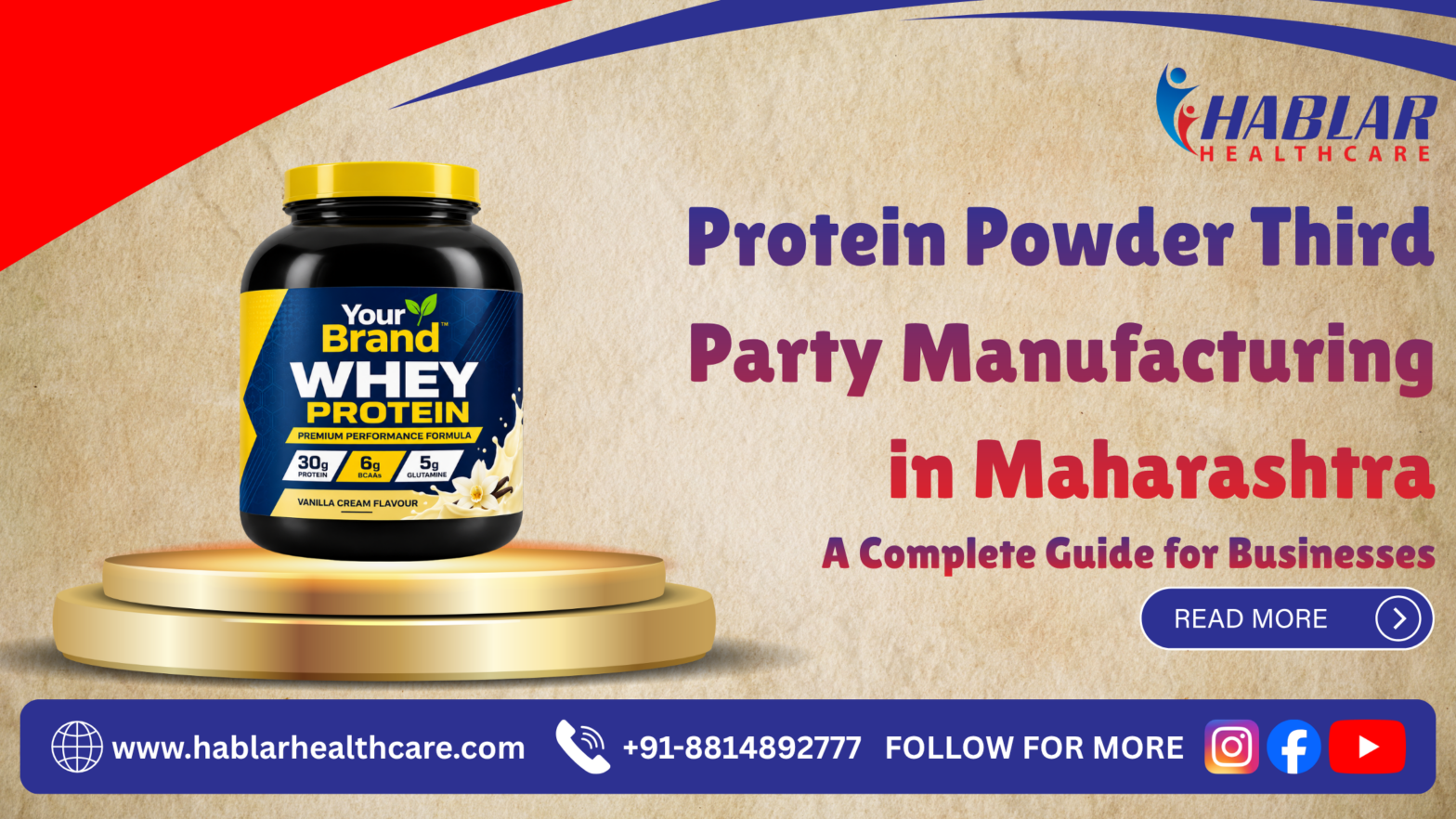
The demand for protein supplements has created new opportunities for businesses looking to enter the nutrition, fitness, and wellness industry. From fitness enthusiasts and gym owners to nutrition brands and online retailers, many businesses are exploring protein-based products to expand their portfolios. For entrepreneurs planning to launch their own supplement brand, protein powder third party manufacturing in Maharashtra can be a practical way to enter this growing market without investing in an independent manufacturing facility.
Maharashtra offers access to major commercial centres such as Mumbai, Pune, Nashik, Nagpur, and Thane, along with established distribution networks, retail markets, and e-commerce opportunities. These factors make the state an important market for businesses involved in nutritional products and fitness supplements.
However, launching a successful protein powder brand involves more than electing a manufacturer. Businesses need to evaluate product formulation, ingredient quality, nutritional composition, packaging, manufacturing capabilities, regulatory compliance, and pricing before making a decision.
Whether you are an existing supplement distributor, a fitness entrepreneur, a startup founder, or a business planning to introduce a private-label nutrition range, understanding the third-party manufacturing process can help you make better decisions.
This guide explains how protein powder contract manufacturing works, which product categories businesses can explore, how to select a suitable manufacturing partner, and what to consider before launching a protein supplement brand in Maharashtra.
What Is Protein Powder Third Party Manufacturing?
Protein powder third-party manufacturing is a business arrangement in which a brand owner contracts an appropriately licensed manufacturer to produce protein powder according to agreed product specifications.
Instead of establishing a manufacturing facility, the business works with an existing manufacturer that has the relevant infrastructure, production capabilities, quality-control procedures, and regulatory permissions.
Depending on the agreement and the manufacturer’s capabilities, services may include formulation selection, ingredient sourcing, powder blending, flavour development, quality testing, packaging, labelling, and finished-product dispatch.
The product can be marketed under the contracting business’s brand when all applicable regulatory and labelling requirements are satisfied.
For example, a fitness nutrition startup in Pune may want to launch its own whey protein powder. Rather than investing in blending equipment, production space, and testing infrastructure, it can explore a third-party manufacturing arrangement with a qualified manufacturer.
This allows the business to focus on brand development, marketing, distribution, customer service, and sales while the manufacturer handles the agreed production activities.
Why Choose Protein Powder Third Party Manufacturing in Maharashtra?
Maharashtra provides several commercial advantages for businesses planning to introduce or expand a nutritional supplement range.
1. Access to a Large Consumer Market
Mumbai, Pune, Nashik, Nagpur, and other urban centres offer opportunities to reach different customer segments through fitness stores, gyms, nutrition retailers, e-commerce platforms, and direct-to-consumer websites.
Businesses can research local demand and develop products according to their target customers rather than relying on a single generic product strategy.
2. Opportunities for Private-Label Supplement Brands
Private-label manufacturing allows a business to market a product under its own brand name through an appropriate manufacturing arrangement.
This can be useful for entrepreneurs who want to establish a distinct identity in the competitive nutrition market. Brand positioning may focus on flavour, product format, ingredient transparency, packaging, or a specific customer segment.
3. Flexible Business Expansion
A business may begin with a limited number of products and expand its range as demand develops. The actual flexibility depends on the manufacturer’s minimum order quantities, production capacity, formulation options, and contractual terms.
A phased approach can help businesses test market demand before committing to a broader product portfolio.
4. Access to Existing Manufacturing Infrastructure
Setting up a protein powder manufacturing facility requires investment in suitable premises, equipment, ingredients, personnel, quality systems, and regulatory compliance.
Third-party manufacturing may reduce the need for this infrastructure investment. However, it does not eliminate expenses associated with product development, packaging, compliance, marketing, distribution, and inventory.
5. Distribution Across Multiple Markets
Businesses based in Maharashtra may initially target their local market and later explore sales across India, subject to their commercial arrangements and applicable requirements.
A manufacturing partner with dependable production planning and logistics can support this expansion.
Types of Protein Powder Products You Can Manufacture
The right product portfolio depends on customer demand, the intended use of the product, available ingredients, manufacturing capabilities, and applicable regulations.
1. Whey Protein Powder
Whey protein is derived from milk and is widely used in sports and fitness nutrition products.
Depending on the formulation, businesses may explore whey protein concentrate, whey protein isolate, or blends containing different protein ingredients.
Before selecting a product, review its declared protein content, ingredient list, nutritional profile, allergen information, taste, solubility, and cost per serving.
2. Plant-Based Protein Powder
Plant-based protein products may appeal to customers looking for non-dairy alternatives.
Depending on the formulation, potential protein sources include pea, soy, rice, or other suitable plant proteins. Businesses should verify ingredient suitability, allergen declarations, nutritional composition, and the regulatory status of the proposed formulation.
3. Mass Gainer Powder
Mass gainer products generally combine protein with carbohydrate sources and may contain additional ingredients according to the formulation.
Their composition should be selected according to the intended consumer and product positioning. Marketing claims should remain accurate and consistent with the product’s approved composition and applicable regulations.
4. Protein Blends
A protein blend combines two or more protein sources or ingredients in a single formulation.
The actual nutritional profile depends on the proportions and quality of the ingredients used. Brands should evaluate the complete formulation instead of assuming that a blend automatically provides superior results.
5. Specialised Nutrition Powders
Some businesses explore specialised nutritional formulations for particular consumer requirements. These products may involve additional formulation, safety, classification, or regulatory considerations.
Claims relating to disease management, clinical nutrition, weight loss, or other specific health outcomes should not be made without appropriate legal and scientific support.
How Does the Protein Powder Third-Party Manufacturing Process Work?
A structured manufacturing process helps businesses move from an initial product idea to a market-ready product:
Step 1: Define Your Product Requirements
Begin by identifying the type of protein powder you want to launch.
Consider the intended customer, protein source, serving size, flavour, nutritional profile, pack size, target selling price, and distribution channel.
A clear product brief makes it easier for manufacturers to assess feasibility and prepare an accurate quotation.
Step 2: Select a Suitable Manufacturer
Evaluate manufacturers based on their relevant licences, production capabilities, ingredient sourcing, quality-control systems, documentation, and experience with the intended product.
Do not assume that a company producing general food supplements necessarily has the capability or permission to manufacture every type of protein powder.
Step 3: Finalise the Formulation
Discuss the proposed formulation with the manufacturer. Important considerations may include protein source, protein content, flavouring system, sweeteners, mixability, ingredient compatibility, and product stability.
The final formulation should be supported by appropriate specifications and meet applicable food-safety and regulatory requirements.
Step 4: Evaluate Samples and Specifications
Where available, review product samples before confirming a commercial order.
Assess taste, aroma, texture, solubility, packaging suitability, and the proposed nutritional composition. Confirm the specifications in writing so that the commercial product can be evaluated against agreed requirements.
Step 5: Confirm Pricing and Minimum Order Quantity
Request a detailed quotation covering the product, packaging, labelling, testing, taxes, transport, and any development charges.
Ask about minimum order quantities, production timelines, payment terms, and the procedure for repeat orders.
Step 6: Complete Packaging and Labelling
Packaging should protect the powder from moisture and other conditions that could affect product quality.
Labels must meet the requirements applicable to the product category. Depending on the classification, these may include ingredient declarations, nutritional information, allergen declarations, serving instructions, warnings, manufacturer details, applicable licence information, batch details, and dates.
Brand artwork should be reviewed before printing.
Step 7: Manufacturing and Quality Checks
The manufacturer produces the product according to the agreed formulation and applicable procedures.
Appropriate quality checks should verify that the finished product meets the required specifications. Businesses should establish how batch documentation, testing records, product release, and quality complaints will be handled.
Step 8: Dispatch and Market Launch
After the required checks and documentation are complete, the finished products can be dispatched according to the agreed arrangements.
Businesses can then coordinate inventory, distribution, e-commerce listings, product information, and marketing activities.
Important Quality Standards for Protein Powder Manufacturing
Quality is a key consideration when selecting a protein powder manufacturer in Maharashtra.
Because protein powders are generally marketed as food or health supplement products rather than conventional pharmaceutical medicines, the applicable regulatory framework must be determined according to the product’s composition, intended use, and classification.
FSSAI Licensing and Product Compliance
Verify that the manufacturer holds the appropriate food business licence for its activities and that the proposed product complies with the applicable requirements.
A general claim that a manufacturer is licensed is not a substitute for verifying the relevant licence, product category, and regulatory documentation.
Ingredient Quality
Ingredient sourcing affects product consistency, safety, taste, and nutritional composition.
Ask how ingredients are evaluated, how suppliers are qualified, and how incoming materials are checked against specifications.
Nutritional Testing
Protein content and other declared nutritional values should be supported by appropriate testing or other legally acceptable substantiation.
Depending on the product, relevant testing may include protein content, moisture, microbiological parameters, and other quality or safety indicators.
Manufacturing Hygiene
Review the manufacturer’s hygiene controls, cleaning procedures, production practices, and measures to prevent contamination or ingredient cross-contact.
Applicable food-safety systems and manufacturing practices should be verified rather than assumed from promotional claims.
Batch Traceability
Batch records support traceability and help businesses investigate quality issues.
Ask about batch identification, testing documentation, complaint handling, and procedures for product withdrawal or recall when required.
Accurate Product Labelling
The product label should accurately reflect the formulation and comply with applicable regulations.
Do not rely on unsupported claims such as guaranteed muscle growth, rapid fat loss, or disease prevention. Claims should be scientifically substantiated and legally permissible.
How to Choose the Best Protein Powder Manufacturer in Maharashtra
Selecting the right manufacturing partner requires a structured comparison.
1. Manufacturing capabilities: Confirm experience with the exact product type and pack format you require.
2. Quality assurance: Review relevant licences, quality procedures, testing arrangements, and documentation.
3. Formulation flexibility: Check whether the manufacturer can support your required ingredients, flavours, nutritional profile, and serving sizes.
4. Minimum order quantity: Choose an order size that matches your budget, storage capacity, and realistic sales forecast.
5. Pricing transparency: Compare the full landed cost instead of considering only the quoted manufacturing price.
6. Packaging options: Assess jars, tubs, pouches, sachets, seals, and other suitable formats according to the product’s needs.
7. Delivery reliability: Review production lead times, transport arrangements, and inventory planning.
8. Communication: A responsive partner should clearly explain product specifications, production schedules, documentation, and commercial terms.
9. Contractual responsibilities: Document responsibility for formulation approval, labelling, testing, regulatory compliance, quality complaints, and product recalls.
10. Long-term suitability: Consider whether the manufacturer can support repeat orders and reasonable business expansion without compromising agreed quality requirements.
The best manufacturer is not necessarily the one offering the lowest quotation. It is the one whose capabilities, documentation, quality systems, and commercial terms match your business requirements.
Cost of Protein Powder Third-Party Manufacturing in Maharashtra
The cost of third-party protein powder manufacturing varies according to the formulation and the scope of the order. There is no single price that applies to every protein powder product.
The following factors can influence the total cost:
- Protein source: Different protein ingredients have different procurement costs.
- Protein concentration: The formulation and declared nutritional specifications affect ingredient requirements.
- Flavour and additional ingredients: Flavour systems, sweeteners, and other ingredients may change the product cost.
- Order quantity: Production volume and purchasing arrangements can influence the per-unit price.
- Packaging format: Containers, pouches, scoops, seals, labels, and printed packaging affect the final cost.
- Testing and documentation: Product-specific testing and compliance requirements may add expenses.
- Transport and taxes: Freight, applicable taxes, and delivery arrangements should be included in the budget.
Before placing an order, request a written quotation that clearly separates the manufacturing cost, packaging, testing, taxes, freight, and any one-time development charges.
Businesses should also calculate their expected selling price, distributor margins, retailer margins, marketing expenses, storage costs, and potential returns before estimating profitability.
Business Opportunities for Protein Powder Brands in Maharashtra
Protein powder businesses can explore different sales channels depending on their target market and resources.
Fitness Stores and Gym Networks
Local fitness retailers and gym-related businesses can provide opportunities to introduce nutrition products to relevant customers. Product quality, transparent information, pricing, and dependable replenishment can help build retailer relationships.
E-Commerce and Direct-to-Consumer Sales
An independent website or online marketplace can help brands reach customers across multiple locations.
Businesses should provide accurate product descriptions, clear ingredient and nutrition information, compliant advertising, secure packaging, and responsive customer support.
Wholesale and Distribution
Distributors can help expand market coverage by supplying products to retailers and other eligible business customers.
Before appointing distributors, define pricing, territory, payment terms, minimum order quantities, stock rotation, and responsibilities for customer complaints.
Private-Label Nutrition Products
Private-label manufacturing may be suitable for entrepreneurs who want to build a distinct brand identity without establishing their own production facility.
The business should still budget for product development, packaging, compliance, marketing, distribution, and inventory.
Expanding Beyond Maharashtra
Once a product has established demand, a business may explore additional Indian markets. Expansion should be based on reliable demand estimates, production capacity, distribution arrangements, and the ability to maintain consistent product quality.
Common Mistakes to Avoid When Starting a Protein Powder Brand
Launching a supplement brand without adequate preparation can create avoidable financial and operational risks.
- Choosing a manufacturer only because of price: Low prices should not replace proper quality and documentation checks.
- Ordering too much stock initially: Large orders may increase inventory and expiry risks if demand is uncertain.
- Ignoring the label requirements: Incomplete or inaccurate labels can create regulatory and commercial problems.
- Making exaggerated health claims: Advertising should be accurate, substantiated, and compliant with applicable requirements.
- Failing to verify product composition: Confirm the formulation and declared nutritional information before production.
- Overlooking packaging quality: Unsuitable packaging can affect product protection and customer experience.
- Ignoring repeat-order planning: Manufacturing lead times and ingredient availability should be considered before inventory runs low.
- Assuming profits are guaranteed: Sales depend on product quality, competition, distribution, pricing, and customer demand.
A measured launch strategy, supported by realistic financial planning and careful supplier evaluation, can help reduce these risks.
Why Long-Term Manufacturing Partnerships Matter
Protein powder manufacturing is not simply a one-time production activity. Brands need to maintain consistent product specifications, dependable supply, appropriate documentation, and clear communication with their manufacturing partners.
A long-term relationship can make production planning easier when both parties have agreed procedures for repeat orders, formulation changes, packaging revisions, testing, and complaint resolution.
Businesses should periodically review product quality, delivery performance, customer feedback, and commercial terms to ensure that the arrangement remains suitable as the brand grows.
For businesses targeting Maharashtra, the most effective approach is to combine a suitable manufacturing partner with a clear product strategy and a realistic understanding of the local market.
Conclusion
Protein powder third party manufacturing in Maharashtra offers an opportunity for nutrition entrepreneurs, fitness businesses, supplement distributors, and established brands to develop their own protein powder products without setting up an independent manufacturing facility.
The process involves selecting an appropriate manufacturer, finalising the formulation, evaluating quality and safety requirements, confirming pricing, preparing compliant packaging, and planning distribution.
Maharashtra’s commercial centres and varied retail channels provide potential routes to market, but business success depends on much more than geography. Product differentiation, accurate labelling, realistic pricing, customer trust, and consistent supply all play important roles.
Before choosing a manufacturing partner, verify its relevant licences, production capabilities, quality-control systems, documentation, and contractual responsibilities. Start with a product range and order quantity that suit your budget and market research, then expand as demand develops.
With careful planning and a quality-focused approach, businesses can establish a stronger foundation for launching and developing a protein powder brand in Maharashtra.
Frequently Asked Questions (FAQs)
1. What is protein powder third-party manufacturing in Maharashtra?
It is a business arrangement in which a brand contracts a suitably licensed manufacturer to produce protein powder according to agreed specifications. The product may be marketed under the brand owner’s name when applicable regulatory and labelling requirements are met.
2. Can I start my own protein powder brand without a manufacturing plant?
Yes, it may be possible to launch a brand through a third-party manufacturing arrangement. You will still need to meet the applicable business, food-safety, labelling, marketing, and other regulatory requirements.
3. Which types of protein powder can be manufactured through third-party manufacturing?
Depending on the manufacturer’s capabilities and applicable permissions, options may include whey protein concentrate, whey protein isolate, plant-based protein powders, mass gainers, and protein blends.
4. How much does protein powder third-party manufacturing cost in Maharashtra?
The cost depends on the protein source, formulation, order quantity, packaging, testing, and other commercial requirements. Request a product-specific quotation rather than relying on a general price estimate.
5. What is the minimum order quantity for protein powder manufacturing?
The minimum order quantity varies between manufacturers and products. It may depend on the formulation, production batch size, packaging type, and whether the product uses an existing or customised formulation.
6. Is FSSAI licensing required for protein powder manufacturing?
Food businesses must comply with applicable FSSAI licensing and registration requirements. The exact requirements depend on the activities performed and the product’s classification. Verify the manufacturer’s relevant licence and the regulatory requirements for your product.
7. How do I verify the quality of protein powder before placing an order?
Review the product specifications, ingredient documentation, applicable testing reports, manufacturing procedures, and relevant quality records. Where appropriate, request a representative sample and confirm the agreed specifications in writing.
8. Can I customise the flavour and packaging of my protein powder?
Many manufacturers offer some customisation, depending on their facilities and minimum order requirements. Confirm available flavours, ingredient options, container sizes, printed packaging, and any additional development charges.
9. Can a startup use third-party protein powder manufacturing?
Yes. This arrangement can help startups avoid the cost of setting up their own manufacturing facility. Startups should nevertheless budget for product development, packaging, compliance, marketing, distribution, and working capital.
10. Which cities in Maharashtra can a protein powder manufacturing business target?
Businesses may explore markets such as Mumbai, Pune, Nashik, Nagpur, Thane, and other locations according to their target audience and distribution capabilities. These are potential markets, not a guarantee of demand or sales.