
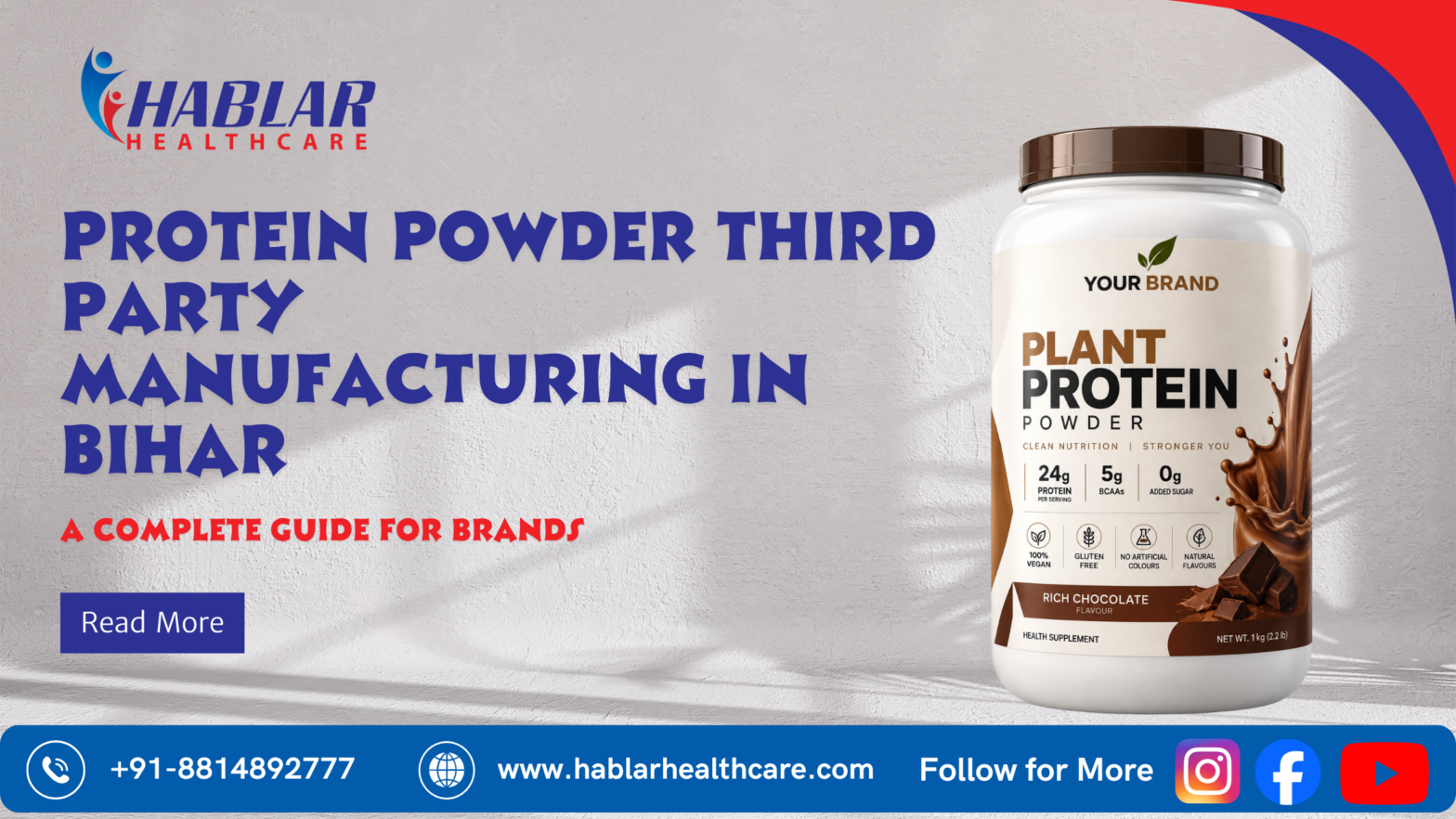
The demand for protein-based nutrition products is growing rapidly across India as consumers become more conscious about fitness, active lifestyles, sports nutrition, and everyday nutritional requirements. Protein powder third party manufacturing in Bihar provides an efficient business model for startups, pharmaceutical companies, nutraceutical businesses, fitness brands, distributors, and entrepreneurs who want to enter the protein supplement market under their own brand name.
This growing demand has also created opportunities for businesses looking to launch their own protein powder brands without establishing a manufacturing facility.
Instead of investing heavily in manufacturing infrastructure, businesses can collaborate with an experienced third-party pharma manufacturers that handles manufacturing, quality control, testing, filling, and packing according to the agreed product specifications.
For brands planning to develop protein products for customers in Bihar and other Indian markets, choosing the right manufacturing partner can make a significant difference in product consistency, packaging, regulatory compliance, and long-term business growth.
What Is Protein Powder Third Party Manufacturing?
Third-party manufacturing is a business arrangement in which a manufacturer produces products for another company or brand.
In the case of protein powder, the brand owner generally provides or approves the product concept, formulation requirements, packaging preferences, and branding details. The manufacturing partner then undertakes the agreed manufacturing and packing activities.
Depending on the project, the manufacturing process may include:
- Raw material procurement
- Ingredient weighing
- Blending
- Product processing
- Quality testing
- Filling
- Sealing
- Label application
- Batch coding
- Packaging
- Finished-product release
The final product can be marketed under the customer’s own brand name, subject to applicable regulatory and contractual requirements.
This model can be particularly useful for companies that want to launch products without purchasing blending, filling, packaging, and quality-control equipment themselves.
Why Choose Protein Powder Third Party Manufacturing in Bihar?
Bihar represents an important market for healthcare, nutrition, wellness, and consumer products. As awareness of protein intake and active lifestyles expands, businesses can explore opportunities for protein-based products across different consumer segments.
A third-party manufacturing model can help businesses focus their resources on branding, distribution, sales, marketing, and customer relationships, while the manufacturing partner manages production activities.
Some potential advantages include:
1. Lower Manufacturing Investment
Setting up a dedicated protein powder manufacturing facility requires investment in premises, machinery, utilities, trained personnel, quality systems, storage, and regulatory requirements.
Third-party manufacturing allows a brand to outsource production instead of establishing all these facilities independently.
2. Faster Product Development
An experienced manufacturer may already have manufacturing processes and product-development capabilities for protein powders and nutritional products.
This can help reduce the time involved in moving from an initial product idea to commercial production, subject to formulation, documentation, testing, packaging, and regulatory requirements.
3. Private Label Branding
Businesses can develop protein products under their own brand identity.
The packaging can be designed around the brand’s:
- Logo
- Product name
- Flavour
- Pack size
- Nutritional information
- Instructions
- Required declarations
- Marketing positioning
4. Multiple Product Formats
Depending on the manufacturer’s capabilities and regulatory classification, businesses may explore different protein product concepts such as:
- Whey protein powder
- Plant protein powder
- Soy protein-based products
- Protein blends
- Mass-gainer-type nutritional products
- High-protein nutrition powders
- Flavoured protein powders
- Specialty nutrition formulations
The exact formulation and claims should always be reviewed for regulatory compliance before commercial production.
Types of Protein Powders Businesses Can Develop
The right product depends on the target audience, formulation requirements, nutritional profile, price positioning, and applicable regulations.
Whey Protein Powder
Whey protein is widely associated with sports and fitness nutrition. Brands may develop whey-based formulations using different protein ingredients and flavour systems.
Common product positioning may include:
- Fitness nutrition
- Protein supplementation
- Active lifestyle
- Workout nutrition
The actual claims and nutritional declarations must comply with applicable food regulations.
Plant Protein Powder
Plant-based protein products are increasingly relevant for consumers looking for vegetarian or plant-origin nutritional options.
Possible protein sources may include:
- Pea protein
- Soy protein
- Rice protein
- Other permitted plant protein ingredients
Formulation depends on nutritional targets, taste, solubility, texture, and regulatory requirements.
Protein Blends
Some products use a combination of protein sources to create a particular nutritional profile.
For example, a formulation may combine different permitted protein ingredients depending on the desired protein content, sensory characteristics, cost, and target market.
Mass Gainer and Protein-Based Nutrition Products
Brands targeting consumers interested in calorie and protein-focused nutrition may explore mass-gainer or broader sports-nutrition concepts.
However, the formulation, nutrient levels, claims, serving size, and labelling need to be evaluated according to the category under which the product is marketed.
Protein Powder Manufacturing Process
A professional protein powder manufacturing process generally involves multiple controlled stages.
Step 1: Product Concept and Formulation
The first stage is determining:
- Protein source
- Protein concentration
- Serving size
- Flavour
- Sweetener system
- Supporting ingredients
- Nutritional profile
- Pack size
- Target price
The formulation should be checked against applicable FSSAI requirements before production.
Step 2: Raw Material Procurement
Ingredients are sourced according to the approved specifications.
Quality documentation and appropriate testing are important because the quality of raw materials directly affects the finished product.
Step 3: Raw Material Inspection
Incoming ingredients may be evaluated against applicable specifications before being released for manufacturing.
Depending on the ingredient and product, quality parameters can include identity, purity, microbiological parameters, physical characteristics, and other applicable tests.
Step 4: Weighing and Dispensing
Ingredients are weighed according to the approved batch formula.
Controlled dispensing helps maintain batch-to-batch consistency.
Step 5: Blending
Protein ingredients and other components are blended using suitable equipment to achieve a uniform mixture.
Proper blending is particularly important when the formulation contains multiple ingredients at different inclusion levels.
Step 6: Quality Testing
Samples may be tested against the product’s approved specifications.
Depending on the formulation and regulatory category, testing may include nutritional, microbiological, physicochemical, and other applicable parameters.
Step 7: Filling and Packaging
The approved powder is filled into the selected packaging format, such as:
- Jars
- Containers
- Pouches
- Sachets
Packaging selection should consider product protection, moisture sensitivity, shelf life, transport conditions, and consumer convenience.
Step 8: Labelling and Batch Coding
The final packaging should contain the declarations required under applicable regulations.
This may include information such as:
- Product name
- Ingredient information
- Nutrition information
- Net quantity
- Batch/lot information
- Date-related declarations
- Manufacturer/marketer details
- FSSAI-related information
- Directions for use where applicable
- Required warnings or declarations
The exact requirements depend on the product category and applicable regulations.
FSSAI Compliance for Protein Powder Manufacturing
Regulatory compliance is one of the most important considerations when launching a protein powder brand in India.
FSSAI states that health supplements and nutraceuticals are governed under the Food Safety and Standards (Health Supplements, Nutraceuticals, Food for Special Dietary Use, Food for Special Medical Purpose, Functional Food and Novel Food) Regulations, 2016, along with subsequent amendments and applicable requirements.
The regulatory classification of a particular protein powder should therefore be determined based on its ingredients, composition, intended use, format, claims, and applicable standards.
FSSAI also provides separate requirements concerning food standards, contaminants, packaging and labelling, and other food-safety matters.
For certain ingredients or products that fall outside existing standards, additional approval requirements may apply under the regulations governing non-specified foods and food ingredients.
Why Regulatory Review Matters
Before manufacturing, brands should review:
- Product category
- Ingredients
- Permitted usage levels
- Nutritional composition
- Claims
- Serving size
- Labelling
- Packaging
- Required licence/registration
- Testing requirements
FSSAI’s published FAQ material also explains that nutritional ingredients in health supplements and nutraceuticals are subject to specified requirements and RDA-related provisions, so formulations should not simply be copied from products sold in other markets.
What to Look for in a Protein Powder Third Party Manufacturer?
Choosing a manufacturing partner should involve more than comparing the lowest quotation.
Manufacturing Infrastructure
Check whether the manufacturer has appropriate infrastructure for:
- Powder blending
- Filling
- Packaging
- Material storage
- Quality control
- Finished-product handling
Quality Control System
A reliable manufacturing partner should have suitable quality-control procedures and documentation.
Ask about:
- Raw material testing
- In-process controls
- Finished-product testing
- Batch documentation
- Microbiological testing
- Stability/shelf-life support where applicable
Formulation Support
If you have only a product concept rather than a finalized formula, formulation support can be valuable.
A manufacturer may assist with:
- Ingredient selection
- Flavour development
- Protein percentage
- Sweetener system
- Solubility
- Texture
- Product positioning
The final formula should still undergo appropriate regulatory review.
Packaging Options
Packaging can significantly influence the appearance and positioning of a protein brand.
Common options include:
- Protein jars
- HDPE containers
- Laminated pouches
- Sachets
- Customized labels
- Printed containers, where feasible
Documentation
Before placing a manufacturing order, clearly establish the documentation that will be provided.
Depending on the product and agreement, this may include:
- Product specifications
- Batch documentation
- Test reports/COA
- Manufacturing records
- Packaging specifications
- Regulatory documents
- Other agreed quality documents
Why Packaging Matters for Protein Brands
Protein powder is highly competitive, and packaging is often one of the first things customers notice.
A good protein package should be:
Clear: Customers should understand what the product is.
Informative: Required nutritional and regulatory information should be presented appropriately.
Practical: The container or pouch should be convenient for storage and repeated use.
Brand-focused: Design elements should create a consistent identity across the product range.
Suitable for the product: Packaging should provide appropriate protection against environmental factors such as moisture where necessary.
For a new brand, a professional combination of product quality and packaging can help create a consistent market identity.
How to Start Your Protein Powder Brand in Bihar
Launching a protein powder brand can be organized into a structured process.
Step 1: Identify Your Target Market
Decide whether you want to target:
- Gym users
- Athletes
- Fitness enthusiasts
- Active adults
- General nutrition consumers
- Vegetarian consumers
- Retail customers
- Online consumers
Step 2: Select the Product
Choose the protein type, flavour, pack size, nutritional profile, and intended market position.
Step 3: Finalize the Manufacturer
Compare manufacturing capabilities, quality systems, documentation, formulation support, packaging options, and commercial terms.
Step 4: Develop the Formula
Finalize the composition with the manufacturing and regulatory team.
Step 5: Review Regulatory Requirements
Ensure the formulation, claims, label, ingredients, and product category are reviewed before commercial production.
Step 6: Approve Packaging
Finalize:
- Jar or pouch
- Label artwork
- Pack size
- Design
- Required declarations
- Batch coding area
Step 7: Conduct Product Testing
Testing should be conducted according to the applicable product specification and regulatory requirements.
Step 8: Start Commercial Production
Once the formulation, documentation, packaging, and commercial terms are approved, manufacturing can proceed according to the agreed production plan.
Benefits of Partnering with an Experienced Protein Powder Manufacturer
A suitable manufacturing partner can offer several operational advantages:
Expertise in Powder Products
Protein powders require appropriate blending, handling, filling, and packaging processes.
Consistent Production
Controlled manufacturing procedures can help maintain consistency between batches.
Quality Documentation
Proper documentation makes it easier for brands to monitor product quality and maintain business records.
Custom Branding
Third-party manufacturing allows businesses to build their own product identity rather than selling only generic products.
Protein Powder Third Party Manufacturing for Startups
Startups often hesitate to enter the protein market because establishing a manufacturing facility requires significant investment.
Third-party manufacturing provides an alternative route.
A startup can focus on:
- Brand development
- Digital marketing
- Social media
- E-commerce
- Distributor networks
- Retail expansion
- Customer service
while the manufacturing partner handles agreed production activities.
This division of responsibilities can make the business model more manageable for new entrepreneurs.
Protein Powder Manufacturing for Pharmaceutical and Nutraceutical Companies
Established pharmaceutical and nutraceutical businesses can also use third-party manufacturing to expand their product portfolio.
For example, a company already selling:
- Tablets
- Capsules
- Syrups
- Nutraceuticals
- Vitamins
- Minerals
may consider adding protein-based nutrition products to its portfolio.
The key is to select formulations and product categories that fit the company’s target market and regulatory strategy.
How Much Does Protein Powder Third Party Manufacturing Cost?
There is no single fixed price for protein powder third-party manufacturing.
The final manufacturing cost can depend on:
- Protein source
- Protein percentage
- Raw material prices
- Formula complexity
- Flavour
- Sweetener system
- Pack size
- Jar or pouch
- Label type
- Printing
- Testing
- Order quantity
- Packaging material
- Logistics
- Additional formulation requirements
For this reason, brands should request a product-specific quotation rather than relying on a generic per-kg manufacturing price.
Minimum Order Quantity for Protein Powder Manufacturing
MOQ varies between manufacturers and products.
It can depend on:
- Raw material procurement
- Packaging material
- Printing requirements
- Product formula
- Batch size
- Pack size
- Manufacturing capacity
Businesses should confirm MOQ before finalizing a manufacturing agreement.
For startups, it can be useful to discuss an initial production quantity that balances inventory investment with expected market demand.
Protein Powder Manufacturing for Private Label Brands
Private-label manufacturing allows entrepreneurs to build products around their own brand.
The process may involve:
Brand Name → Product Concept → Formula → Manufacturer → Testing → Packaging → Finished Product → Distribution
A strong private-label strategy should focus on more than attractive packaging. Product quality, compliant claims, transparent labelling, appropriate pricing, and reliable supply are equally important.
Why Businesses Are Exploring Protein Manufacturing Opportunities
Protein has become an important part of conversations around fitness and nutrition. This has created opportunities for businesses across several channels.
Potential sales channels include:
- Gyms
- Fitness centres
- Pharmacies
- Nutritional stores
- Supermarkets
- Distributors
- E-commerce marketplaces
- Brand websites
- Social media commerce
Businesses should select their distribution strategy according to their target audience and product positioning.
Frequently Asked Questions About Protein Powder Third Party Manufacturing in Bihar
1. What is protein powder third party manufacturing?
Protein powder third-party manufacturing is a model where a specialized manufacturer produces protein powder for another company, which sells the finished product under its own brand, subject to applicable agreements and regulations.
2. Can I launch my own protein powder brand in Bihar?
Yes, businesses can explore launching their own protein powder brands by working with an appropriate third-party manufacturer and completing the applicable regulatory, packaging, testing, and commercial requirements.
3. What types of protein powder can be manufactured?
Depending on the manufacturer’s capabilities and regulatory classification, products may include whey-based powders, plant protein powders, protein blends, and other nutrition powder formulations.
4. Is FSSAI compliance required?
Yes. Food businesses manufacturing, selling, or distributing products covered by FSSAI regulations must comply with applicable food-safety requirements. FSSAI identifies specific regulations covering health supplements and nutraceuticals.
5. Can I manufacture protein powder under my own brand name?
A third-party manufacturing arrangement can allow a business to market a manufactured product under its own brand, subject to the manufacturing agreement, trademark/brand rights, labelling requirements, and applicable regulations.
6. Can protein powder formulation be customized?
Customization may be possible depending on the manufacturer’s capabilities, available ingredients, production scale, regulatory requirements, and product specifications.
7. What packaging is available for protein powder?
Common formats include jars, containers, pouches, and sachets. The appropriate format depends on the product, pack size, shelf-life considerations, and branding requirements.
8. How much does protein powder manufacturing cost?
The cost depends on the formulation, protein source, raw materials, packaging, order quantity, testing, and other production requirements. A customized quotation is therefore generally more useful than a standard price.
9. Can startups choose third-party manufacturing?
Yes. Third-party manufacturing can be a practical option for startups because it allows them to outsource production rather than establishing their own manufacturing infrastructure.
10. What documents should I ask the manufacturer for?
Depending on the product and agreement, businesses may request product specifications, test reports/COA, batch-related documentation, packaging specifications, and other agreed quality and regulatory documents.
Final Thoughts
The opportunity for protein powder third party manufacturing in Bihar is relevant for startups, nutraceutical companies, pharmaceutical businesses, fitness brands, distributors, and entrepreneurs looking to develop their own nutrition products.
However, successful protein brands are built on more than manufacturing capacity. Product formulation, raw-material quality, regulatory compliance, testing, packaging, brand positioning, and reliable supply all play an important role.
Before beginning commercial production, businesses should clearly define their product concept, confirm the regulatory category, finalize the formulation, review the label, select suitable packaging, and establish quality and manufacturing responsibilities with the third-party manufacturer.
For companies planning to enter the protein nutrition market, a well-planned third-party manufacturing model can provide a structured way to develop and scale a private-label product portfolio while keeping the focus on branding, sales, and distribution.